
Why Ten-Word Answers Get Some Candidates Elected
My grandmother used to say politicians talk too much. Turns out she was wrong—they don’t speak enough about the right things. Here we are stuck in this bizarre situation where everyone’s yelling past each other in Twitter-sized chunks, and whoever comes up with the catchiest one-liner gets to be president. Democracy’s become like Jeopardy—except instead of answering in the form of a question, you win by giving the shortest answer. And honestly? I’m not sure if we’re getting any smarter about picking leaders, or if we’re getting better at making noise.
Trump Rewrote the Whole Playbook
So 2016 rolls around, and something unexpected happens. While Hillary Clinton was publishing detailed policy papers that could double as doctoral dissertations, Trump was up there saying stuff like “Build the Wall” and watching crowds go absolutely nuts.
Was it fair? Probably not. Was it effective? You bet.
Trump realized what every other politician somehow missed: regular people don’t spend their weekends reading policy papers. They’re juggling work, kids, bills, and life. When they finally have five minutes to think about politics, they want someone to tell them straight up what’s going on.
“Make America Great Again” wasn’t really about policy—it was about feeling. It tapped into a deep-seated sense that things used to be better, that somewhere along the way we had lost something important. You could argue about whether that’s true or not, but you couldn’t argue with how it made people feel.
“Drain the Swamp” was even smarter. Everyone knows politics is corrupt, but most politicians dance around it with euphemisms about “reform” and “transparency.” Trump just said what everyone was thinking: the whole system stinks, and it’s time to clean house.
The guy turned campaign rallies into rock concerts where the audience knew all the words.
Why Your Brain Falls for This Stuff
There’s real research behind why soundbites work so well, and honestly, it’s embarrassing for those of us who think we’re logical voters.
Our brains are shortcut machines. They hate working hard, especially when there’s too much information flying around. Scientists have technical terms for this—terms like “cognitive load theory”—but really, it comes down to this: familiar things feel right, and simple things feel smart.
When you hear “Yes We Can” for the hundredth time, your brain stops analyzing whether it’s meaningful. Instead, it thinks, “Oh, I know this one. It feels right.” It’s the same reason advertising jingles get stuck in your head. Repetition breeds familiarity, familiarity breeds comfort, and comfort breeds trust.
Not dumb—it’s evolution. Our ancestors, who took forever to make decisions, became lunch for whatever was hunting them. Those who could size up a situation quickly and act on it? They lived long enough to have kids.
The problem is, presidential elections aren’t fair attacks. They probably deserve a little more thought.
The Greatest Hits Collection
Every winning campaign since the invention of television has understood this, even if it stumbled into it by accident.
Reagan was the master. “There you go again” wasn’t policy—it was personality. Four words that made Jimmy Carter look like a lecturing professor, while Reagan came across as your wise-cracking uncle who always had the perfect comeback.
Clinton’s people put up a sign in their war room: “It’s the economy, stupid.” Not because they thought voters were stupid, but because they knew simple messages cut through better than complex ones. When people were worried about their jobs, they didn’t want to hear about foreign policy achievements. They wanted to know someone understood their pain.
Obama turned “Yes We Can” into a movement that felt bigger than politics. It wasn’t about healthcare or foreign policy—it was about possibility. People chanted it at rallies as if it were a prayer.
Even the losers had great lines. The slogan, “I’m with Her,” is brilliant branding that turned voting into an act of solidarity. “Feel the Bern” made a 74-year-old socialist sound like a rock star.
Election 2024: Same Game, New Players
Jump to today, and the rules haven’t changed—they’ve just gotten more intense. Social media turned every voter into a potential campaign volunteer, and nothing spreads faster than a phrase that fits in a tweet.
Politicians aren’t just thinking about how their message sounds at a town hall anymore. They’re thinking about how it’ll look as a TikTok video, how it’ll read in a group text, and whether it’ll make a good meme.
The competent candidates have learned to craft their messages for maximum virality. They’re not just running for president—they’re running for trending topic.
Watch any current campaign event, and you’ll see it in action. The applause lines are shorter, punchier, and more designed for sharing than for substance. Because in 2024, every voter is also a broadcaster with their platform.
When Simple Gets Scary
But here’s the thing that keeps me up at night: the same tricks that make ten-word answers so politically effective can make them dangerous as hell.
Real problems don’t have bumper sticker solutions. Immigration isn’t just about walls—it’s about visa systems, asylum laws, economic factors, international treaties, and a dozen other things that don’t fit on a hat.
Healthcare isn’t just about insurance—it’s about drug pricing, medical innovation, rural hospitals, physician shortages, and regulatory frameworks that can be overwhelming to consider.
Climate change isn’t just about wind farms and solar panels—it’s about international cooperation, economic transitions, technological innovation, social justice, and geopolitical implications that span generations.
The danger isn’t that politicians use simple language. The danger is when we forget that simple language can’t solve complicated problems.
That West Wing Scene Everyone Shares
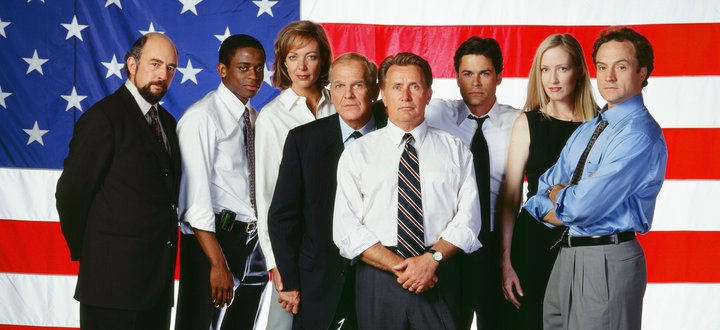
You know the one. President Bartlet is in a debate, and his opponent gives a snappy ten-word answer about crime. Instead of firing back with his soundbite, Bartlet stops and says something like, “I was wrong to think we could solve our problems with simple solutions.”
It’s a great TV moment because it captures something real about the tension between campaigning and governing. Campaign mode rewards quick, decisive answers. Governing mode requires careful consideration of complex trade-offs.
The best presidents figure out how to do both. They can give you the bumper sticker version when you need it, but they also understand the messy reality underneath.
Media Makes Everything Worse (Except When It Doesn’t)
Cable news loves ten-word answers because they fit perfectly in a chyron. Twitter algorithms boost them because they generate engagement. Talk radio hosts repeat them because they’re easy to remember.
The entire media ecosystem rewards the most provocative, memorable, and shareable content. Nuanced policy discussions don’t go viral. “Build the Wall” does.
However, here’s a peculiar paradox: the same technology that disseminates oversimplified messages also provides us with unprecedented access to detailed information. Campaign websites, policy white papers, voting records, fact-checks—it’s all there if you want to dig.
The question is whether enough people bother to look.
What Smart Voters Do
Look, ten-word answers aren’t going anywhere. They work too well, and politicians aren’t idiots. They’re going to keep using whatever helps them win.
But that doesn’t mean we have to be passive consumers. The smartest voters I know treat campaign slogans like movie trailers—entertaining previews that might get you interested, but not substitutes for the actual film.
When you hear a phrase that gets your blood pumping (in a good way or bad way), that’s your cue to ask the follow-up questions. What does this mean? How would it work? What would it cost? Who gets hurt? What could go wrong?
These aren’t gotcha questions. They’re the questions that separate campaign promises from the reality of governing.
The Future Looks Familiar
Technology will continue to change the delivery system, but the introductory psychology will remain unchanged. Virtual reality may enable candidates to create immersive policy experiences. AI might personalize messages for individual voters. Holographic debates might replace town halls.
However, we’ll still be humans with short attention spans and busy lives, seeking simple ways to comprehend complex choices.
The politicians who figure this out—who can master both the art of the soundbite and the science of governing—those are the ones who’ll succeed in whatever comes next.
Beyond the Bumper Sticker
Democracy works best when voters are informed and engaged, but also realistic about what politics can accomplish. Ten-word answers can be a gateway to that engagement, but only if we treat them as conversation starters rather than conversation enders.
Next time you hear a political slogan that makes you want to stand up and cheer (or throw your remote at the TV), pause for a second. Ask yourself: what happens after the applause dies down? What would this look like in the real world? What are we not talking about?
History shows us that the most perilous political moments occur when we cease asking those questions. When we let the bumper sticker substitute for the blueprint. When we forget that governing is harder than campaigning.
So yeah, you can probably identify the ten-word answer candidates in this election cycle. The more complex question is whether you can figure out what they mean, and whether they can figure out how to govern once the slogans stop working.
Because eventually, they always do.
As we navigate the upcoming election cycles, it’s crucial to remember the importance of depth and substance in political discourse. The appeal of a “10-word answer” is undeniable, but so is the need for thoughtful and comprehensive solutions to our challenges.
Donald Trump: In the 2016 election, Donald Trump became synonymous with succinct and powerful slogans like “Build the Wall,” “Make America Great Again,” and “Drain the Swamp.” These phrases resonated with voters frustrated with the status quo, capturing attention with their straightforwardness. Trump’s reliance on memorable, if simplistic, slogans has continued throughout his political career and into his 2024 campaign. History reminds us to be wary of ten-word answers to complicated political issues or concerns. Can you identify the 10-word answer candidates running in this election cycle (mid-term and 2024) and who they were they in 2016?
Using simple, memorable phrases to encapsulate complex policy positions remains powerful in modern politics. These slogans can be highly effective in rallying support and conveying a candidate’s core message quickly. However, they often fail to capture the nuanced reality of the issues. The challenge for voters and politicians alike is to look beyond the catchy slogans and demand detailed, actionable policies that address the complexities of today’s world.
Below is the West Wing
Ready to Dig Deeper? Start Here:
🕵️ WATCH THE DETECTIVES
Learn how to see beyond political theater and focus on what really matters
START INVESTIGATING →Here is a great example of the big print giveth and the small print giveth away. Our 45th knows this well. The 45th relied on the short attention span of his followers, his press, and loyal spokepersons. The followers hear the headline but fail to hold the 45th accountable. Broken promises the result.
This new DNC ad should be aired nationwide. pic.twitter.com/rFW5W0VrQn
— No Lie with Brian Tyler Cohen (@NoLieWithBTC) October 28, 2022
THE WEST WING Reunion // ATX TV Festival // Season 5
Aaron Sorkin created an alternate reality that we all wished was real, where President Bartlet and his WEST WING staffers did everything they could to change their world and in the process, left a lasting impact on ours – and the world of TV. In a rare conversation with Mr. Sorkin, director Thomas Schlamme, and lead cast members, we re-visit the heart-pounding conviction, spit-fire writing, and unforgettable characters that continue to impact viewers a decade later, as well as the series’ ongoing relevance to American political culture. #TheWestWing Panelists: Aaron Sorkin, Bradley Whitford, Richard Schiff, Dule Hill, Janel Moloney, Joshua Malina, Thomas Schlamme, Melissa Fitzgerald Moderator: Lawrence O’Donnell Visit atelevisionexperience.com for this and many more full ATX panels and Q&As NOW! ATX TV Festival Season 6: June 8-11, 2017 www.atxfestival.com www.artsandlabor.co