
Owsley Stanley: The Alchemist of the Psychedelic Age
"Nearly everyone familiar with the 1960s counterculture knows Timothy Leary and Ken Kesey, but few know the real Charlemagne behind Steely Dan's iconic song."
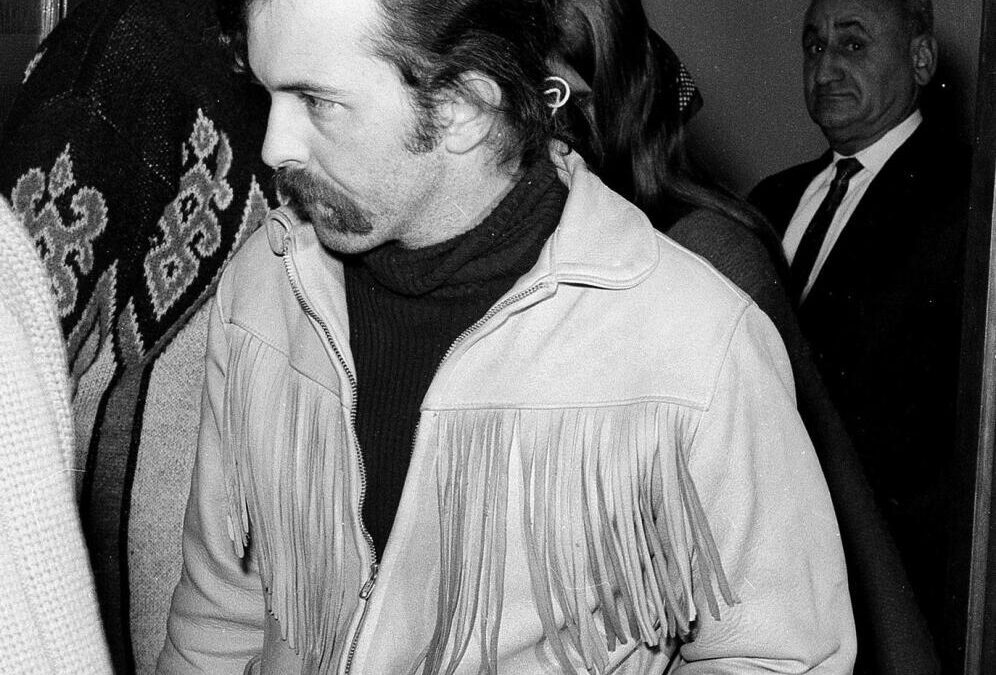
Nearly everyone familiar with the 1960s counterculture is aware of the names Timothy Leary and Ken Kesey, the public faces of psychedelia. Yet behind the scenes, few figures were more influential than Augustus Owsley Stanley III, known simply as Owsley or "Bear." In 1976, Steely Dan released "Kid Charlemagne," immortalizing the Owsley mythology for generations to come.
Stanley, who died in 2011 at age 76, left a distinct imprint on the era. As one of the first and most prolific producers of LSD, his name became synonymous with quality. Rolling Stone once called his product "the best LSD in the world... the genuine Owsley."
Between 1965 and 1967, he reportedly manufactured over a million doses of the drug, much of which fueled Kesey's Acid Tests — wild, sensory-drenched gatherings where strobe lights, music, and psychedelics collided. Stanley was famously immortalized as the "Acid King" in Tom Wolfe's 1968 classic The Electric Kool-Aid Acid Test.
Owsley's influence extended beyond chemistry. He became an essential figure in the rise of the Grateful Dead, not merely by supplying psychedelics but by applying his engineering mind to the band's early sound. As their first sound engineer, Stanley developed what became known as the "Wall of Sound," a colossal PA system that dramatically reduced distortion and enabled the band to mix from the stage. Dead historian Dennis McNally said, "Owsley was critical in setting the example of someone who would go to almost any length, beyond what anyone would think reasonable, to pursue the goal of sonic perfection."
Born in Kentucky on January 19, 1935, Stanley came from a prestigious lineage: He was the grandson of a Kentucky governor and the son of a naval commander. His education was varied and unconventional: He studied engineering at the University of Virginia before dropping out, served as a radio operator in the Air Force, and later enrolled briefly at UC Berkeley during the eruption of the Free Speech Movement.
It was in Berkeley that Stanley first encountered LSD in 1964. He described his first experience with Rolling Stone in 2007: "I remember the first time I took acid and walked outside, and the cars were kissing the parking meters." Inspired to guarantee a trustworthy supply, he unearthed a synthesis recipe from the university library, teamed up with a chemistry student named Melissa Cargill, and began production. His high-purity LSD became a core catalyst of the West Coast psychedelic scene.
Next, Stanley's lab raid led to two years of incarceration. Yet upon his release in 1972, he returned to the Grateful Dead, contributing both financially and technically. He even housed the band in a pink stucco home in Watts, near one of his labs. Anecdotes from the time, such as Stanley reportedly arriving at a Sunset Boulevard bank with his motorcycle helmet stuffed with cash, only added to his legend.
Owsley's reach even touched graphic design: with artist Bob Thomas, he co-created the Grateful Dead's iconic skull-and-lightning-bolt logo. Moreover, his meticulous recordings of about 100 Dead performances became prized archival material, many later issued as official releases.
Later in life, Stanley resettled in Australia, driven by his conviction that it was the safest refuge from a coming environmental collapse. He became a sculptor and jeweler, attracting a clientele that included musicians like Keith Richards. Described by friends as a mix of "scientist and engineer, chemist and artist," Stanley remained unapologetically eccentric.
He died in a car accident in Queensland during a storm, his wife Sheilah surviving with minor injuries. Stanley is survived by four children, eight grandchildren, and two great-grandchildren.
Ultimately, Owsley Stanley's impact wasn't about slogans or mythologizing. It was about tangible change—in sound, chemistry, and the infrastructure of a subculture that continues to ripple through music and art today. No wonder that Steely Dan Kid Charlemagne is so mesmerizing and popular.
Notes on Sources Used
- Quotes from Stanley are from his 2007 Rolling Stone interview.
- Paraphrased historical facts are drawn from sources such as The Electric Kool-Aid Acid Test, A Long Strange Trip by Dennis McNally, Elaine Woo's 2011 Los Angeles Times obituary, and reports from Rolling Stone and NPR.
Basic Bio:
- Born January 19, 1935, in Kentucky (grandson of a U.S. senator and governor).
- I dropped out of college, enlisted in the Air Force, and later dabbled in electronics and chemistry.
- Moved to California during the 1960s, right as the counterculture was starting to explode.
Owsley and LSD:
- Manufacturing Legend:
- Owsley produced the first mass-scale, high-purity batches of LSD in the United States.
- Between 1965 and 1967, he reportedly made over a million doses — sometimes estimated as much as five million.
- Key Innovations:
- He figured out how to manufacture LSD in large quantities with extraordinary purity, earning him mythic status among acid users.
- Supplying the Psychedelic Scene:
- His acid fueled the San Francisco scene — the Grateful Dead, Ken Kesey’s Merry Pranksters, Jefferson Airplane, and every prominent figure in the Haight-Ashbury movement.
- Many called him the "King of LSD."
- Famous Product Names:
- His product names—"White Lightning," "Purple Owsley," and "Monterey Purple"—became brands in the underground world.
Connection to the Music World:
- Grateful Dead:
- Owsley became the Dead's patron, financier, and sound engineer. He bought them sound equipment and designed what would eventually become the legendary Wall of Sound.
- Technical Genius:
- He wasn't just a drug maker — he revolutionized live concert sound by emphasizing clarity and high-fidelity PA systems.
- Recording Pioneer:
- Many famous live recordings from the late '60s (Grateful Dead, Janis Joplin, Jefferson Airplane) exist because Owsley had the foresight and gear to record them.
Downfall:
- Law Enforcement Catches Up:
- After the early freewheeling years, federal authorities began cracking down on LSD in 1966-67.
- There were multiple arrests in the Owsley file, notably in 1967 when his Berkeley lab was raided, leading to a prison sentence.
- Shift in the Scene:
- By the time Owsley exited prison (early' 70s), the counterculture was dissolving. The optimism of ‘67’s Summer of Love had turned into the violence of Altamont and general societal burnout.
- Later Life:
- After the fall of the acid scene, he stayed somewhat connected to music and continued to live a very unconventional, often nomadic life. He later moved to Australia, where he died in a car crash in 2011.
?
How "Kid Charlemagne” Mirrors Owsley’s Story
- "While the music played, you worked by candlelight."
- — Owsley ran secret LSD labs during the height of the '60s counterculture.
- "Those San Francisco nights"
- — He was at the center of the Haight-Ashbury psychedelic scene.
- "All those Dayglow freaks who used to paint the face."
- — His LSD fueled artists, hippies, and the Merry Pranksters.
- "Now your patrons have all left you in the red."
- — After 1967, the idealism faded, and demand collapsed.
- "Did you feel like Jesus?"
- — Owsley believed he was expanding human consciousness.
- "Is there gas in the car?"
- — Reflects his frantic escapes from police crackdowns.
- "Clean this mess up, or we'll all end up in jail."
- — Paranoia rose as authorities shut down LSD operations.
Jerry Garcia's "Super Bear" Owsley Stanley Modded Princeton Reverb and the PEANUT Guitar
featuring Rick Turner and Mik Bondy
What They Said About Bear
Voices from those who knew the legendary Owsley Stanley
Kid Charlemagne · Steely Dan
A Decade Of Steely Dan
℗ 1976 Geffen Records
Released on: 1985-01-01
Producer: Gary Katz
Recording arranger: Chuck Findley
Composer, Lyricist, Recording Arranger: Walter Becker
Recording Arranger, Composer, Lyricist: Donald Fagen
"Steely Dan - Kid Charlemagne (live @ Pine Knob Amphitheatre - 8.11.2003)">Steely Dan - Kid Charlemagne (live @ Pine Knob Amphitheatre - 8.11.2003)
Steely Dan Kid Charlemagne The Royal Scam (1976) Pine Knob Amphitheatre Clarkston, MI August 11, 2003 Everything Must Go Tour Live Band: Donald Fagen: vocals, keyboards Walter Becker: guitars, vocals Keith Carlock: drums Tom Barney: bass Ted Baker: keyboards Jon Herington: guitars Cornelius Bumpus: tenor saxophone Walt Weiskopf: saxophone Jim Pugh: trombone Michael Leonhart: trumpet Carolyn Leonhart-Escoffery, Cynthia Calhoun, Cindy Mizelle: backup vocals
Bear Stanley: Reflections on Life, LSD and DMT
Saturday 7 November 2009 Entheogenesis Australis Conference Victoria, Australia Biography - Augustus Owsley Stanley III (January 19, 1935 – March 12, 2011) Considered by many as one of the legends of the sixties counterculture, Bear Stanley denies his heroic status, and spends his days working on various sculptures and writing essays on subjects such as the importance of carbon dioxide, the primary and only 'plant food', to the expansion of food crops and life on earth, fair and equitable taxation (equal and low percentage on all 'income'), a proper run-off method to determine the results of elections and how to unify and balance law making—writing laws in ordinary language rather than legalese, including 'sunset clauses' to allow change to adjust to the rapid changes in today's world-- amongst others. He is renowned for his contributions to sound engineering, particularly working with live gig iconoclasts like the Grateful Dead, and for perfecting the concepts of on-stage monitors and high-quality PAs. A tireless archivist, he kept a "diary" of his front-of-house mixes, including hundreds of Grateful Dead performances, and has seen the release of several albums from his "sonic journal" tapes of PA mixes. Bear was a minor participant in the Acid Tests of Ken Kesey and the Merry Pranksters. He was the first underground cook to produce high-purity LSD in the 1960s, when it was legal, including the famous White Lightning and Monterey Purple. In the video, he finds it hard to talk, as Bear Stanley underwent extensive radiation for throat cancer, and his voice and health suffered from the treatment. --- Footnote -- This recording was made on 14 November 2009 at the University of Melbourne at the follow-up talks to the outdoor Entheogenesis Australis (EGA) 4-day conference, (6-9 November 2009).
The main conference and this mini EGA follow-up event were both headlined by Bear (Owsley) Stanley and Bob Jesse from The Council on Spiritual Practices. The following recording of the Bear, introduced by Martin W and Rak Razam, is an abridged version of a talk scheduled for release on DVD at the forthcoming EGA conference in December 2011. This edited talk offers a glimpse of this amazing counter-culture icon, who had a lot more to offer countless generations than he is often given credit for. The Bear was a gifted and highly intelligent individual who went about things his own way. But above all, the Bear was a true artist on many levels, who possessed the drive to create in numerous mediums, from sculpture, sound, and alchemy, to list just some. This recording has been released at this reflective time, in memory of the Bear, and offers a unique encounter with a remarkable individual in his later years. Sadly, our dear friend Denis Shaw, the pioneer filmmaker of the EGA DVD series, shared a similar fate to the Bear himself, in that they both died in accidents before their time. EGA is grateful for the time and energy that the Bear shared with us during his stay with the EGA family. We feel very privileged to have hosted a wise elder of the psychedelic community. You will be greatly missed, Bear Stanley. Rest in Peace.


