
Ella Fitzgerald: The Journey from “Ungovernable” to Jazz Icon
Ella Fitzgerald’s voice, known for its warmth, agility, and breathtaking virtuosity, stands as a monument in the landscape of American jazz. Revered worldwide as the “First Lady of Song,” her journey from a troubled, poverty-stricken youth to a symbol of excellence in jazz is as extraordinary as her vocal range. But behind that legendary voice lies a story of resilience, perseverance, and an unbreakable connection to the American jazz tradition.
The Troubled Early Years: From Dancer to “Delinquent”
Ella Jane Fitzgerald was born on April 17, 1917, in Newport News, Virginia. Her early years were marked by instability; by the time she was a teenager, she had endured the death of her mother and a tumultuous relationship with her stepfather, a period during which her love for music and dance became her primary solace. Initially, she harbored dreams of becoming a dancer, honing her skills in Harlem’s Savoy Ballroom, where she absorbed the rhythms and styles of swing and jazz culture. This foundation in rhythm and movement would later inform the impeccable timing and phrasing she brought to her singing.
However, tragedy and hardship were constants in Fitzgerald’s early life. After her mother’s sudden death in 1932, she moved to Harlem to live with her aunt. Struggling to adjust, Fitzgerald dropped out of school and was drawn into a precarious world, briefly working as a lookout at a brothel and assisting her aunt with a numbers-running operation. In 1933, at just 15 years old, she was declared “ungovernable” by Judge George Smyth of Westchester County’s Children’s Court. Sentenced to the New York State Training School for Girls in Hudson, New York—a reform school where young girls were often punished for stepping outside societal norms—Ella’s future was uncertain.
For Ella, these difficult circumstances would ultimately serve as a crucible. Her time in Hudson may have seemed a dead-end to some, but it was a brief, harsh chapter that underscored her resilience. Her voice was a hidden gift that would soon open doors beyond her wildest dreams.
An Unexpected Break: From Apollo to Stardom
In 1934, a year after leaving Hudson, Fitzgerald’s life took a fortuitous turn. Encouraged by friends, she braved the stage of Harlem’s Apollo Theater for an amateur night competition. Intending to dance, Ella became intimidated by the dazzling Edwards Sisters act that had preceded her. Quickly, she pivoted to singing instead, choosing the hauntingly beautiful “Judy” and Hoagy Carmichael’s “The Object of My Affection.” Her performance stunned the audience, and Fitzgerald won first place. This turning point propelled her into the jazz spotlight and led to her joining Chick Webb’s orchestra, where she would find both mentorship and success.
Under Webb’s guidance, Ella developed into a powerhouse. She brought charm, humor, and an innate musicality that soon transformed the band’s reputation and repertoire. In 1938, their recording of “A-Tisket, A-Tasket,” with lyrics partly penned by Ella herself, became a massive hit, establishing her as a rising star in jazz.
Ella’s Voice as Instrument: Virtuosity and Joy
Beyond her compelling backstory, Ella’s vocal technique was nothing short of revolutionary. Her range, often cited as spanning three octaves, allowed her to explore melodies with astonishing fluidity. Her scat singing—improvised melodies composed of nonsensical syllables—became her hallmark. Ella’s voice was an instrument, moving through intricate jazz arrangements as nimbly as any saxophone or trumpet. Her scat solos were expressions of pure musicality, drawing on rhythm and tone to create an experience both joyful and profound.
Her 1960 performance of “Mack the Knife” in Berlin exemplifies this virtuosity. Midway through the song, she famously forgot the lyrics, but her quick wit and mastery over her voice turned the lapse into a legendary moment of improvisation. Ad-libbing with playful scatting, Ella transformed what could have been a stumbling block into a Grammy-winning rendition that still stands as one of jazz’s most celebrated live recordings.
The Legacy of a Jazz Icon
Ella’s impact on jazz cannot be overstated. In a career that spanned nearly six decades, she recorded hundreds of songs, from the definitive Cole Porter Songbook to her collaborations with jazz luminaries like Louis Armstrong, Duke Ellington, and Count Basie. Her recordings of the American songbook canon redefined standards, imbuing them with a timelessness that resonated across genres and generations.
Yet Ella’s influence extended beyond her musical output. As an African American woman who rose to fame during the Jim Crow era, she broke racial and gender barriers, opening doors for future generations of artists. Her talent and grace on stage, even in segregated venues, served as a quiet but powerful assertion of equality and dignity.
Ella Fitzgerald’s music is more than entertainment; it is an invitation into the history, struggles, and triumphs of jazz itself. Listening to her sing is like hearing the spirit of American music come to life—a reminder of what this art form can be when talent and perseverance meet. Whether through the hauntingly beautiful “Summertime” or the jubilant “How High the Moon,” Ella’s voice remains a beacon, capturing the soul of jazz in all its joy, complexity, and resilience.
Ella Fitzgerald didn’t just sing jazz—she embodied it. Her life and artistry continue to inspire, reminding us that even from the humblest beginnings, greatness can emerge.
How High The Moon (1st Take)


Ella Fitzgerald vocal range
According to our database the vocal range of this artist is:
D3 – B5 (2.8 octaves)
Song with the LOWEST pitch:
Misty (D3-C#5)
Song with the HIGHEST pitch:
Agua de Beber (G#4-B5)
How High The Moon (1st Take)
Provided to YouTube by Universal Music Group How High The Moon (1st Take) · Ella Fitzgerald Lullabies Of Birdland ℗ 1947 The Verve Music Group, a Division of UMG Recordings, Inc. Released on: 1954-01-01 Associated Performer, Vocals: Ella Fitzgerald Author: Nancy Hamilton Composer: Morgan Lewis

It has taken us far too long, seven years almost, to feature a tribute to our most deserving American Jazz singer, Ella Fitzgerald. Perhaps we deferred due to the plethora of living singers calling for our attention first. Regardless, please accept our full apologies for taking this long.
Visit Wiki for the complete biography and so many other dedications throughout printed and virtual media. Here at Durham Cool, we focus on our emotional attachment to certain songs, artists. Music for us is so much more than listening to a good song. Music is our entirerai·son d’ê·tre
/ˌrāzôn ˈdetrə/
noun
the most important reason or the purpose for someone or something’s existence.
“an institution whose raison d’être is public service broadcasting”
Ella is my mom’s favorite. My Karamazov brothers and I were weaned on Ella singing the Cole Porter Songbook. I was cooed by her melodic voice and buoyed by her rapid-fire scat singing as a wee child. When older, I turned away from the great American heritage Jazz traditionalists and moved towards Blues, R&B, and new wave experimentalists. Ella played in the background throughout my childhood.
Now at middle age, I return to all things fabulous in our American musical traditions. We took time last year to recognize Linda Rondstadt and the new Americana Artists inspired by her like Courtney Marie Andrews and Brandi Carlile. We explored British Pop uncovering recent singers/songwriter standouts like Zak Abel. Perhaps you recall we looked at new artists, like Tyler Childers, Putting the Hurt Back in Country where it belongs, returning to the strong singer/songwriter tradition. “Have you noticed the return to quality in Country Music and the larger tent of Americana Music over the last ten years? Could this be an awakening in the broad music listening public for quality and “verisimilitude.”?
Today we look thoroughly with admiration and awe on this 2021 Presidential inauguration day to the great Ella Fitzgerald. Wow. Listen to her, “whoops forgot the lyric” moment, not skipping a full beat recovery with Master extemporaneous/gleeful pitch-perfect mimicry of Satchmo scat singing. She saved herself, amazed the audience, added much-needed joy/humor to a very dark black opera song. Ella’s improvisation of new lyrics in this Berlin performance earned her a Grammy Award. Ella is an American Treasure-she deserves your full attention and massive amounts of respect. You read this article due to Ella’s influence on my household and the American Music Traditions. Live, here, fully, brightly, NOW!
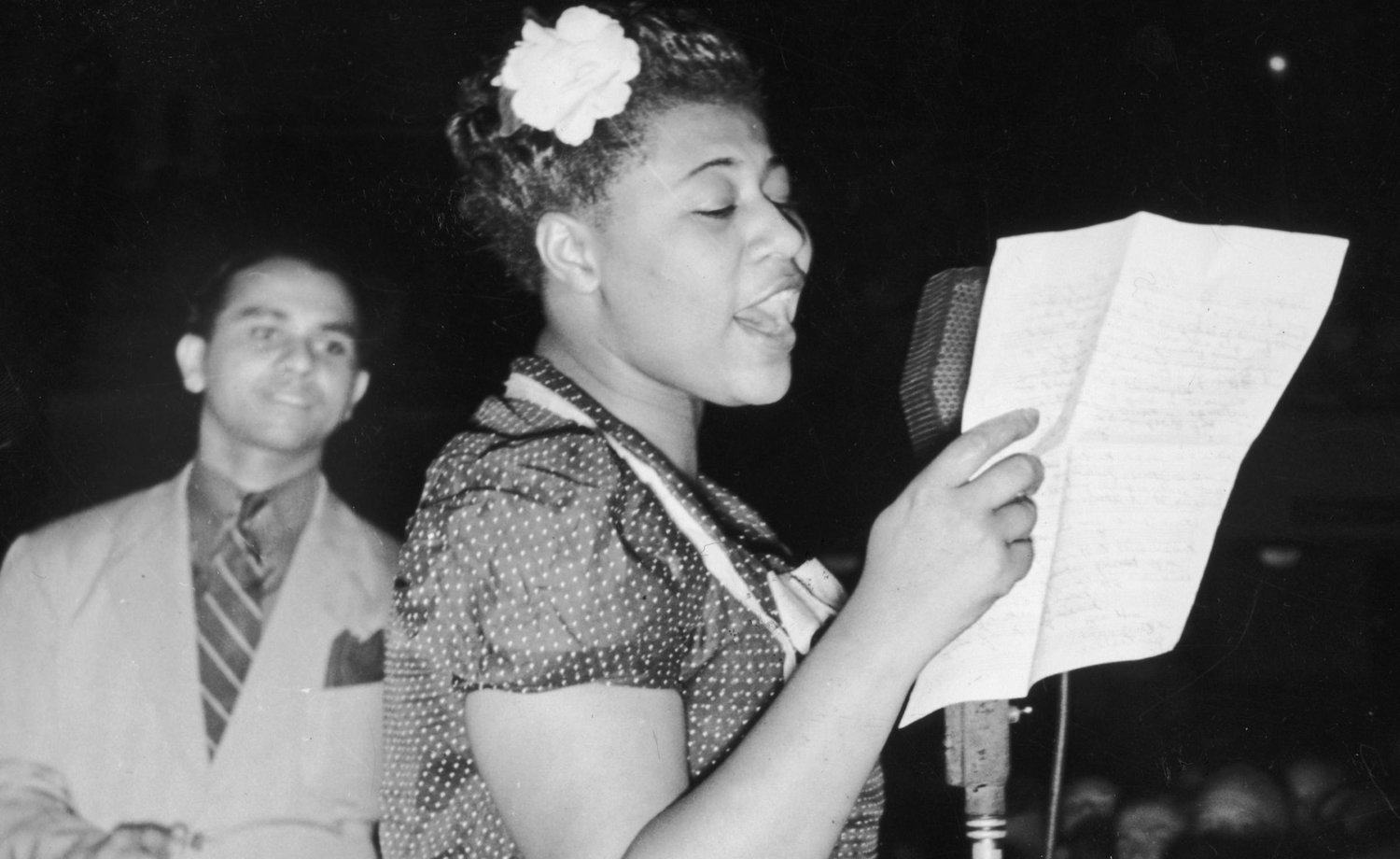
THE “UNGOVERNABLE” ELLA FITZGERALD
On April 10, 1933, according to records at the New York State Archives, Westchester County judge George W. Smyth sentenced a fifteen-year-old “colored” girl named Ella Fitzgerald to the New York State Training School for Girls in Hudson, NY because she was “ungovernable and will not obey the just and lawful commands of her mother.”
Judge Smyth, who would eventually serve thirty years as a Children’s Court judge, believed that parental guidance and early training in the home were the bedrock of a child’s social development. In 1933, he sentenced ten girls between the ages of 12 and 15 to the Hudson reform school, the only state juvenile institution that accepted both black and white children. Seven of these girls were “colored.”
Fitzgerald’s arrival at Hudson was recorded across the span of two pages in a “General Record of Girls Committed to the New York State Training School for Girls” logbook, as were the arrivals of six other girls — Emmabelle Cogswell, Anna Mae Cater, Doris Bazmore, Evelyn Spagner, Marion Wilson and Anna Perry — because they ran away from home, were “morally impaired,” were “incorrigible” or “wayward,” or violated “the lawful demands” of their mothers or fathers.
Ella Jane Fitzgerald was born in Newport News, Virginia, on April 17, 1917. Information about her early life is sketchy and biographical accounts sometimes differ in details. For the most part, she was reported to be an excellent student at school, and, encouraged by her stepfather, she loved music and wanted to be a dancer. She learned dance steps at the Savoy ballroom and eventually taught dances such as the Suzie Q. After Fitzgerald’s mother died unexpectedly in early 1932, biographers note that her mother’s sister moved the fifteen-year-old to Harlem, fearing physical mistreatment from the young girl’s stepfather. Fitzgerald soon dropped out of junior high school and, according to several sources, worked briefly as a lookout for a local brothel and her aunt’s numbers-running racket.
The Training School’s “committed girls” logbook at the State Archives in Albany, New York, shows that Fitzgerald arrived in Hudson on April 18, 1933, about a week after Judge Smyth, adjudicating her delinquent, imposed a standard sentence of three to five years.
Ella Fitzgerald Destroys the Harmonic Minor Scale, then goes off
Summertime, Live in Berlin, 1968, with the Tee Carson Trio.
Original video: https://youtu.be/u2bigf337aU
Ella Fitzgerald – Summertime (1968)
Ella Fitzgerald & the Tee Carson trio – Summertime (from Porgy and Bess, by George Gershwin). Tee Carson, piano; Keter Betts, bass; Joe Harris, drums. The first lady of song in Berlin, 1968. Beautiful mother singing a lullaby to her baby. Summertime lyrics Songwriters: George & Ira Gershwin, Du Bose & Dorothy Heyward

Eagle Eye Media’s Live in Montreux series continues with travel through time to June 22, 1969, featuring a performance from The First Lady of Song, Ella Fitzgerald. Featuring fully restored Black and White footage and remixed audio in 5.1 and DTS, this program presents a stunning performance from one of the most versatile jazz singers of all time.
Joining Fitzgerald in this performance are Tommy Flanagan (piano), Frank de la Rosa (bass), and Ed Thigpen (drums). Tracklisting: 1. Give Me The Simple Life 2. This Girl’s In Love With You 3. I Won’t Dance 4. A Place For Lovers 5. That Old Black Magic 6. Useless Landscape 7. I Love You Madly 8. Trouble Is A Man 9. A Man And A Woman 10. Sunshine Of Your Love 11. Well Alright Okay You Win 12. Hey, Jude 13. Scat Medley 14. A House Is Not A Home
Ella Fitzgerald – Live at Montreux 1969
Music in this video
Song
Artist
Writers
Licensed to YouTube by
Song
Artist
Album
Licensed to YouTube by
Song
Artist
Album
Writers
Licensed to YouTube by
Song
Artist
Album
Licensed to YouTube by
Song
Artist
Album
Licensed to YouTube by
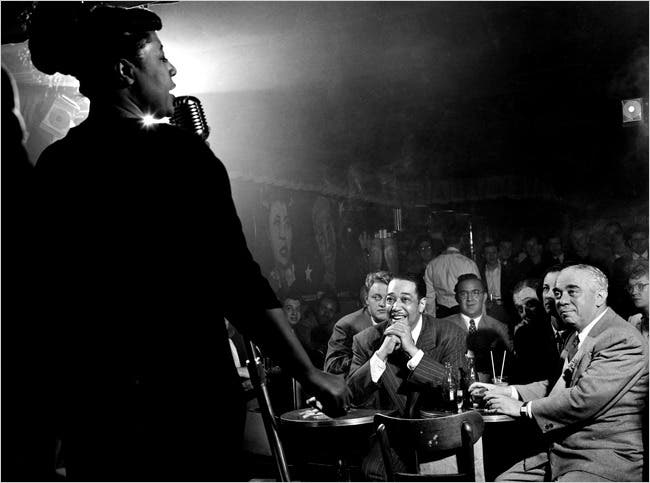
How Ella Fitzgerald Turned Forgotten Lyrics Into One Of Her Best Performances Ever

Most people who don’t know jazz can probably recognize the name of one of the genre’s best singers: Ella Fitzgerald. Fitzgerald is one of the eight women at the center of this season of NPR Music’s Turning the Tables, and she’s arguably one of the most important vocalists not just in jazz but in the entire history of American music. With an exceptional vocal style, supreme technical capabilities, and spirited energy, she was “The First Lady of Song.” By 1960, Fitzgerald had become a global sensation. That February she gave an unforgettable performance in West Berlin for an audience of thousands. On the setlist was “Mack The Knife,” a huge hit first made popular by Bobby Darin and Louis Armstrong. Fitzgerald sang the song flawlessly until about halfway through when she forgot the lyrics. But she didn’t stumble — instead, she playfully free-styled her way to the end with nonsense syllables and improvised words — the singular jazz style called scatting. This unforgettable and Grammy Award-winning performance demonstrated her masterful grace under pressure. Later in the set, Fitzgerald showed off her scat skills again in her interpretation of “How High The Moon.” Considered to be one of the best scat solos ever recorded, it demonstrates her sharp vocal control, perfect intonation, and rhythmic acumen. Besides its musical excellence, the performance also revealed her ironic sense of humor and gift for “quoting,” or referencing other songs while improvising. Jazz critic Will Friedwald says Fitzgerald was the all-time master of quoting. He remembers he once “went through the song bar by bar and pulled out 50 songs that she quoted in, like, five minutes. Just incredible the way her mind works!” While her musicianship was legendary, what may be most important is the legacy she’s left for the vocalists who followed. Before Fitzgerald, singers haven’t considered musicians the same way instrumentalists were; at that time, “the only requirement for a vocalist was to sing the lyrics,” says singer Charenee Wade. But Fitzgerald proved that singers were capable of the same level of artistry as any other member of the band. Wade continues, “I’m just thankful that she did that for us. She created a pathway for vocalists to be a part of what I consider to be all the fun.”