
The North Carolina Roots of Artist Ernie Barnes
![Ernie Barnes (American, 1938-2009) Quintet, circa 1989 Oil on canvas 36 x 60 inc<br />
Est: $500,000 - $700,000<br />
Sold:<br />
Upgrade to view prices<br />
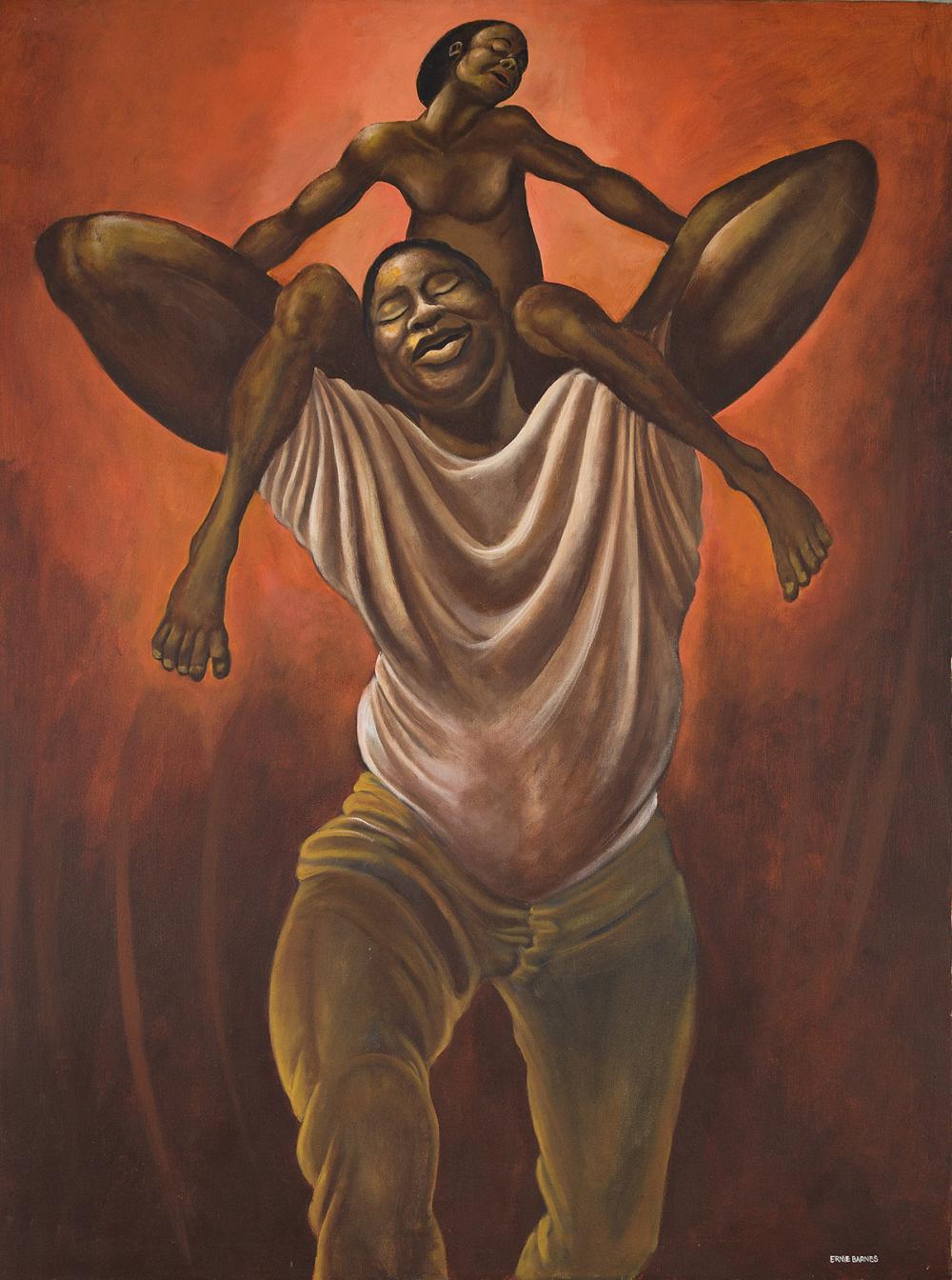
Ernie Barnes (American, 1938-2009) Quintet, circa 1989 Oil on canvas 36 x 60 inches (91.4 x 152.4 cm) Signed lower right: Ernie Barnes PROVENANCE: The artist; Private collection, Philadelphia, Pennsylvania, acquired from the above; Thistlethwaite Americana, Middleberg, Virginia; [sale]The Winter Show, New York, January 2020; Private collection, Miami, Florida, acquired from the above. EXHIBITED: Grand Central Art Galleries, Inc., New York, "The Beauty of the Ghetto, Exhibition of Neo-Manneriest Paintings," October 30-November 17, 1990. LITERATURE: Central Art Galleries, Inc., New York, The Beauty of the Ghetto, Exhibition of Neo-Mannerist paintings, exhibition catalogue, 1990, p. 29, illustrated. The present work is housed in an original handmade artist frame and is also accompanied by a copy of the Central Art Galleries, Inc., The Beauty of the Ghetto exhibition catalogue, and Ernie Barnes Liberating Humanity from Within exhibition catalogue. The works of American painter Ernie Barnes are experiencing a comeback like that of no other artist of the last decade. Barnes' circa-1989 painting Quintet – a highlight of Heritage's May 12 American Art Signature Auction – is among the most recognizable pieces by the former pro footballer, who was once fined by the Denver Broncos' head coach for sketching during team meetings. Barnes, perhaps best known for his painting Sugar Shack, used in the credits of the TV show Good Times and on the cover of Marvin Gaye's 1976 album I Want You, is one of the 20th century's most distinctive painters. Last year, Sugar Shack sold for $15.3 million at Christie's – 76 times its high estimate of $200,000. "Almost like a more modern Thomas Hart Benton or El Greco," says Aviva Lehmann, Heritage's Director of American Art. "His works are lyrical, as close to dancing as a painting can get. And Quintet is among the most intimate masterworks of his entire oeuvre." Quintet was exhibited in the fall of 1990 at New York's Grand Central Art Galleries, as part of Barnes' solo exhibition The Beauty of the Ghetto, which was subtitled Exhibition of Neo-Mannerist Paintings – and that "neo-mannerist" is apropos, given that a hallmark of Barnes' work is how elongated and fluid his human figures are; Barnes' background as an athlete granted him a breathtaking interpretation of bodies in motion. And Quintet ranks among Barnes' greatest achievements, a joyful depiction of jazz musicians at work and at play, a piece so alive it echoes with a bebop soundtrack. Their eyes are closed – a hallmark of Barnes' work that dates back to 1971, when he said he first conceived of The Beauty of the Ghetto as an exhibition. "I began to see, observe, how blind we are to one another's humanity," Barnes said. "We don't see into the depths of our interconnection. The gifts, the strength and potential within other human beings." Barnes has long been acknowledged as a master by musicians who often used his works as album covers, among them Curtis Mayfield, BB King and Gaye. His lithe, ecstatic works look almost like sheet music – figures like notes dancing across the staff. Which should come as no surprise: Barnes' father played piano in the family's Durham, North Carolina home, and Barnes was so influenced by dad he framed each painting in distressed wood as a tribute: "Daddy's fence," he once said, "would hug all my paintings in a prestigious New York gallery." The painter, too, was raised listening to church choirs. Listen closely. Quintet, much like Sugar Shack, roars and reverberates like the long Saturday night before the Sunday morning. The painting brings the viewer dir</p>
<p>Heritage Auctions](https://www.coolmediallc.com/wp-content/uploads/2024/11/H1042-L327157965.jpeg "Ernie Barnes (American, 1938-2009) Quintet, circa 1989 Oil on canvas 36 x 60 inc Est: $500,000 - $700,000 Sold: Upgrade to view prices Ernie Barnes (American, 1938-2009) Quintet, circa 1989 Oil on canvas 36 x 60 inches (91.4 x 152.4 cm) Signed lower right: Ernie Barnes PROVENANCE: The artist; Private collection, Philadelphia, Pennsylvania, acquired from the above; Thistlethwaite Americana, Middleberg, Virginia; [sale]The Winter Show, New York, January 2020; Private collection, Miami, Florida, acquired from the above. EXHIBITED: Grand Central Art Galleries, Inc., New York, \"The Beauty of the Ghetto, Exhibition of Neo-Manneriest Paintings,\" October 30-November 17, 1990. LITERATURE: Central Art Galleries, Inc., New York, The Beauty of the Ghetto, Exhibition of Neo-Mannerist paintings, exhibition catalogue, 1990, p. 29, illustrated. The present work is housed in an original handmade artist frame and is also accompanied by a copy of the Central Art Galleries, Inc., The Beauty of the Ghetto exhibition catalogue, and Ernie Barnes Liberating Humanity from Within exhibition catalogue. The works of American painter Ernie Barnes are experiencing a comeback like that of no other artist of the last decade. Barnes' circa-1989 painting Quintet – a highlight of Heritage's May 12 American Art Signature Auction – is among the most recognizable pieces by the former pro footballer, who was once fined by the Denver Broncos' head coach for sketching during team meetings. Barnes, perhaps best known for his painting Sugar Shack, used in the credits of the TV show Good Times and on the cover of Marvin Gaye's 1976 album I Want You, is one of the 20th century's most distinctive painters. Last year, Sugar Shack sold for $15.3 million at Christie's – 76 times its high estimate of $200,000. \"Almost like a more modern Thomas Hart Benton or El Greco,\" says Aviva Lehmann, Heritage's Director of American Art. \"His works are lyrical, as close to dancing as a painting can get. And Quintet is among the most intimate masterworks of his entire oeuvre.\" Quintet was exhibited in the fall of 1990 at New York's Grand Central Art Galleries, as part of Barnes' solo exhibition The Beauty of the Ghetto, which was subtitled Exhibition of Neo-Mannerist Paintings – and that \"neo-mannerist\" is apropos, given that a hallmark of Barnes' work is how elongated and fluid his human figures are; Barnes' background as an athlete granted him a breathtaking interpretation of bodies in motion. And Quintet ranks among Barnes' greatest achievements, a joyful depiction of jazz musicians at work and at play, a piece so alive it echoes with a bebop soundtrack. Their eyes are closed – a hallmark of Barnes' work that dates back to 1971, when he said he first conceived of The Beauty of the Ghetto as an exhibition. \"I began to see, observe, how blind we are to one another's humanity,\" Barnes said. \"We don't see into the depths of our interconnection. The gifts, the strength and potential within other human beings.\" Barnes has long been acknowledged as a master by musicians who often used his works as album covers, among them Curtis Mayfield, BB King and Gaye. His lithe, ecstatic works look almost like sheet music – figures like notes dancing across the staff. Which should come as no surprise: Barnes' father played piano in the family's Durham, North Carolina home, and Barnes was so influenced by dad he framed each painting in distressed wood as a tribute: \"Daddy's fence,\" he once said, \"would hug all my paintings in a prestigious New York gallery.\" The painter, too, was raised listening to church choirs. Listen closely. Quintet, much like Sugar Shack, roars and reverberates like the long Saturday night before the Sunday morning. The painting brings the viewer dir Heritage Auctions")
Ernie Barnes (American, 1938-2009) Quintet, circa 1989 Oil on canvas 36 x 60 inc
Est: $500,000 – $700,000
Sold:
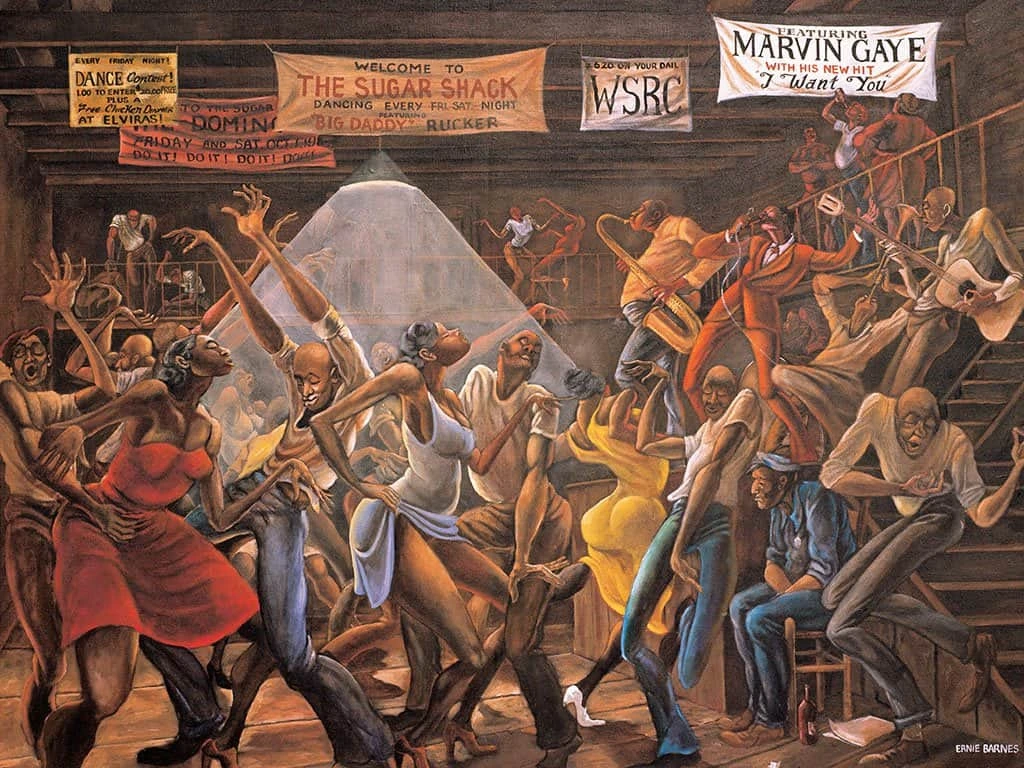
Ernie Barnes (American, 1938-2009) Quintet, circa 1989 Oil on canvas 36 x 60 inches (91.4 x 152.4 cm) Signed lower right: Ernie Barnes PROVENANCE: The artist; Private collection, Philadelphia, Pennsylvania, acquired from the above; Thistlethwaite Americana, Middleburg, Virginia; [sale]The Winter Show, New York, January 2020; Private collection, Miami, Florida, acquired from the above. EXHIBITED: Grand Central Art Galleries, Inc., New York, “The Beauty of the Ghetto, Exhibition of Neo-Manneriest Paintings,” October 30-November 17, 1990. LITERATURE: Central Art Galleries, Inc., New York, The Beauty of the Ghetto, Exhibition of Neo-Mannerist paintings, exhibition catalog, 1990, p. 29, illustrated. The present work is housed in an original handmade artist frame. It is also accompanied by a copy of the Central Art Galleries, Inc., The Beauty of the Ghetto exhibition catalog, and Ernie Barnes Liberating Humanity from Within exhibition catalog. The works of American painter Ernie Barnes are experiencing a comeback like that of no other artist of the last decade. Barnes’ circa 1989 painting Quintet – a highlight of Heritage’s May 12 American Art Signature Auction – is among the most recognizable pieces by the former pro footballer, who the Denver Broncos head coach once fined for sketching during team meetings. Barnes, perhaps best known for his painting Sugar Shack, used in the credits of the TV show Good Times and on the cover of Marvin Gaye’s 1976 album I Want You, is one of the 20th century’s most distinctive painters.
Last year, Sugar Shack sold for $15.3 million at Christie’s – 76 times its high estimate of $200,000. “Almost like a more modern Thomas Hart Benton or El Greco,” says Aviva Lehmann, Heritage’s Director of American Art. “His works are lyrical, as close to dancing as a painting can get. And Quintet is among the most intimate masterworks of his entire oeuvre.” Quintet was exhibited in the fall of 1990 at New York’s Grand Central Art Galleries as part of Barnes’ solo exhibition The Beauty of the Ghetto, which was subtitled Exhibition of Neo-Mannerist Paintings – and that “neo-mannerist” is apropos, given that a hallmark of Barnes’ work is how elongated and fluid his human figures are; Barnes’ background as an athlete granted him a breathtaking interpretation of bodies in motion. And Quintet ranks among Barnes’ greatest achievements, a joyful depiction of jazz musicians at work and at play, a piece so alive it echoes with a bebop soundtrack. Their eyes are closed – a hallmark of Barnes’ work that dates back to 1971, when he said he first conceived of The Beauty of the Ghetto as an exhibition. “I began to see, observe, how blind we are to one another’s humanity,” Barnes said. “We don’t see into the depths of our interconnection. The gifts, the strength, and potential within other human beings.” Barnes has long been acknowledged as a master by musicians who often used his works as album covers, including Curtis Mayfield, BB King, and Gaye. His lithe, ecstatic works look almost like sheet music – figures like notes dancing across the staff. This should come as no surprise: Barnes’ father played piano in the family’s Durham, North Carolina home, and dad so influenced Barnes he framed each painting in distressed wood as a tribute: “Daddy’s fence,” he once said, “would hug all my paintings in a prestigious New York gallery.” The painter, too, was raised listening to church choirs. Listen closely. Much like Sugar Shack, Quintet roars and reverberates like the long Saturday night before the Sunday morning. The painting brings the viewer dir.
Heritage Auctions
Ernie Barnes: From the Gridiron to the Canvas, Capturing the Spirit of Community Title Goes Here
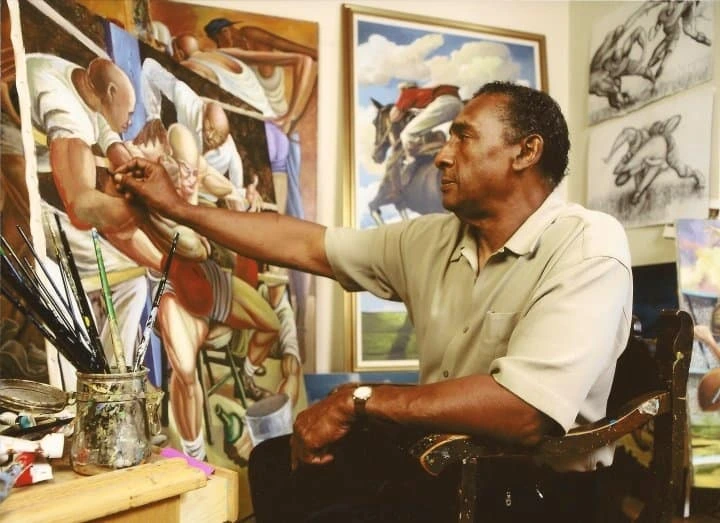
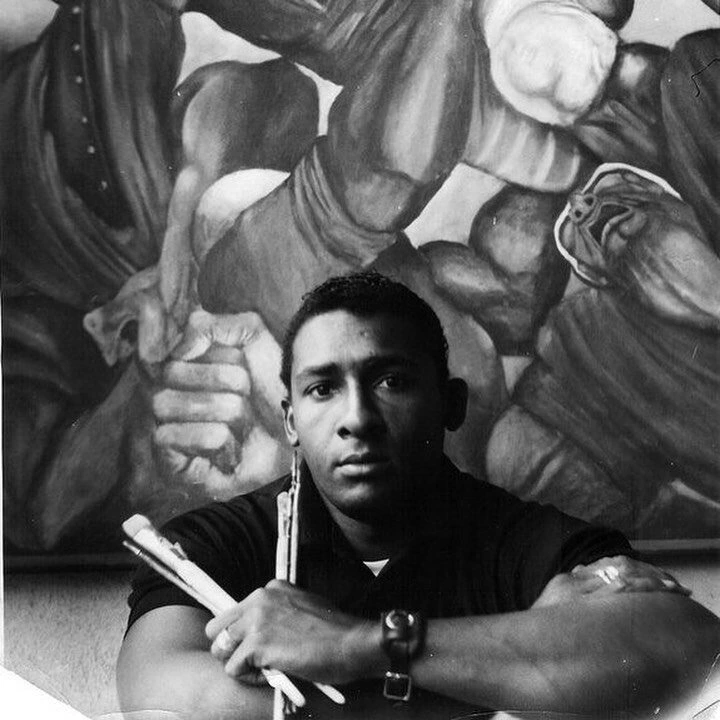
Ernest “Ernie” Barnes Jr., born in Durham, North Carolina in 1938, is remembered not only as a talented athlete but as one of the most distinctive American artists of his time. Growing up in a segregated South, Barnes experienced the challenges and vibrancy of his community firsthand. His art would later become a testament to those experiences, capturing the lively spirit, struggles, and resilience of African American life.
Before he became an acclaimed painter, Barnes found early success in sports. A standout athlete at Durham’s Hillside High School, he went on to play football at North Carolina College at Durham (now North Carolina Central University). His prowess on the field earned him a place in the NFL, where he played as an offensive lineman for five seasons with teams including the Denver Broncos and the San Diego Chargers. Yet, even during his athletic career, Barnes’ passion for art was undeniable; he often sketched scenes from his life and surroundings, and his teammates even dubbed him “Big Rembrandt.”
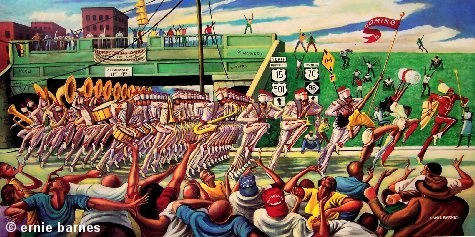
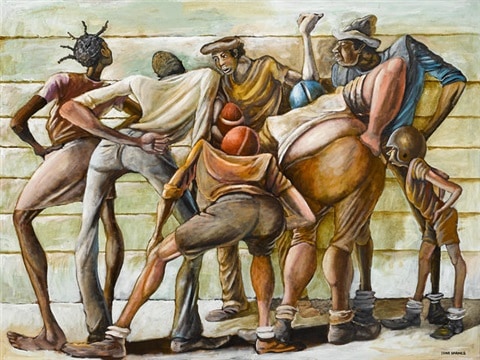
When injuries eventually ended his football career, Barnes transitioned full-time to his true calling: art. He quickly distinguished himself with a style he called “neo-mannerist,” characterized by elongated, fluid figures that seem to dance with movement and life. This approach gave his paintings a kinetic energy, echoing the spirit of the community gatherings, church services, and street scenes he grew up observing. His works are often celebrated for their depiction of African American life in ways that combine grace with the rawness of lived experience.
Among his most celebrated works is The Sugar Shack, a painting that became iconic after appearing on the TV show Good Times and the cover of Marvin Gaye’s album I Want You. This piece, with its vibrant portrayal of a crowded dance hall, is a testament to Barnes’ ability to capture the joy, rhythm, and movement of communal life. Through such works, he brought the energy and unity of his early community in Durham to a broader audience, using his canvas to preserve the memories and vitality of African American culture.
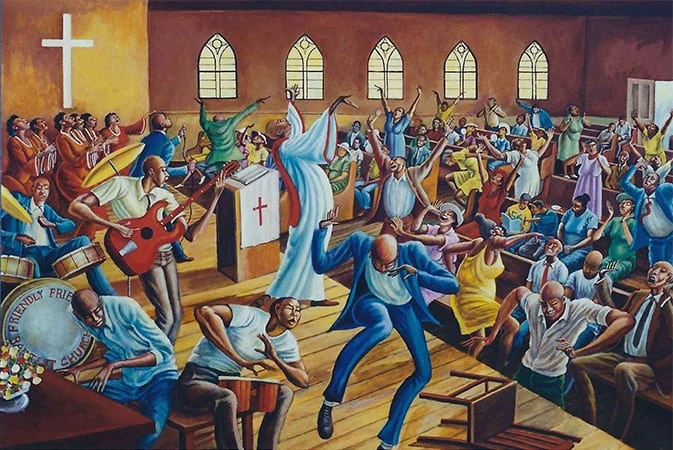
In addition to The Sugar Shack, Barnes’ paintings often explore themes of resilience, spirituality, and social unity. His experiences during segregation and his football career influenced his perspective, adding layers of depth and emotion to his art. The elongated limbs and expressive postures of his figures reflect both a reverence for the human body and an appreciation for the spirit’s endurance—qualities shaped by his years as both an artist and an athlete.
Today, Ernie Barnes’ legacy endures as a powerful example of the intersection of sports and art. His work not only highlights the stories of his community but also stands as a unique blend of personal experience and cultural reflection, celebrating the beauty and complexity of African American life.
About
Known for his unique style of elongation, energy, and movement, Barnes is the first professional American athlete to become a noted painter!
Ernie-Barnes
Ernie-Barnes
ernie-barnes-street-huddle
The-Sugar-Shack
The-Sugar-Shack
Open-Durham-Ernie-Barnes
Open-Durham-Ernie-Barnes
Friendly-Friendship-Baptist-Church (1)
Friendly-Friendship-Baptist-Church-by ernest Barnes1.webp
Ernie Barnes: An American Story
Born and raised in Durham, North Carolina during segregation, Ernie Barnes captured the lively spirit of his community in his artwork. Barnes played in the NFL for five seasons, but art was his true calling. His works include The Sugar Shack, the iconic painting featured in the Good Times television series and on the cover of a Marvin Gaye album. The influences of his life and schooling at Hillside High School and North Carolina Central University can be seen in his distinctive creative work. Learn more about artist Ernie Barnes in the North Carolina Museum of History’s video series “A Storied Past: North Carolina’s African American History. Experience the exhibit, “The North Carolina Roots of Artist Ernie Barnes,” at the North Carolina Museum of History, open now through March 3, 2019. Producer: Melody Hunter-Pillion. NC State University Public History Music: Kevin MacLeod