
Rosalía’s Lux: A Mystical Journey Through Sound, Spirit, and Transformation
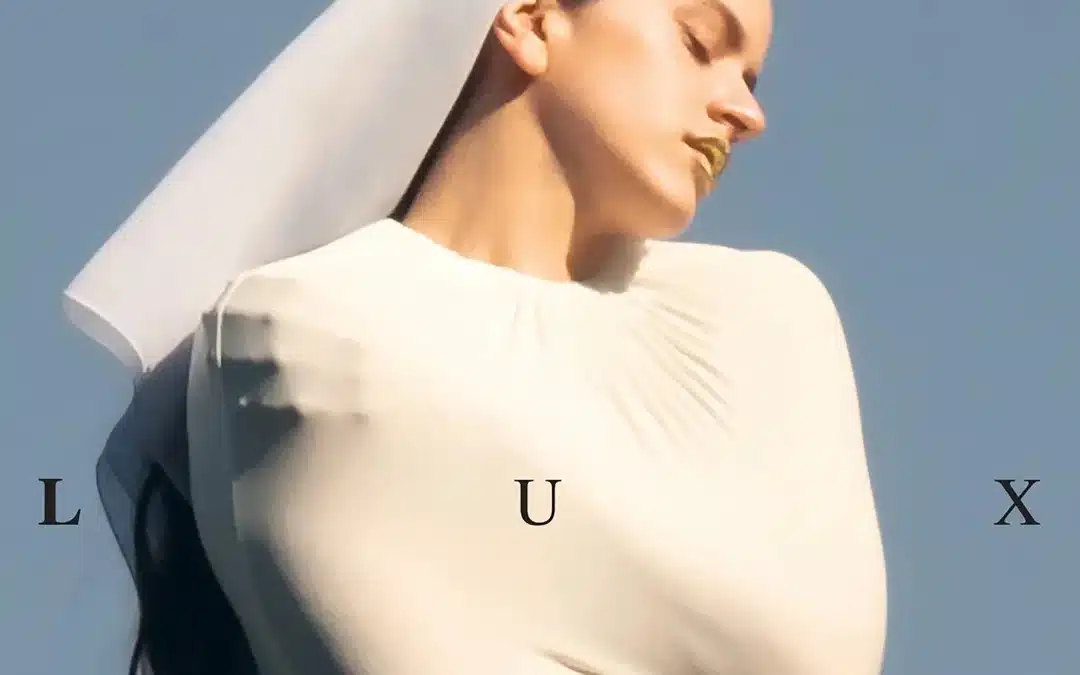
Something is happening with Rosalía Vila Tobella that feels rare in 2025’s pop landscape. Her fourth studio album, Lux, dropped in November, and honestly? It’s not what anyone expected. This isn’t another collection of streaming-optimized singles. Lux is a spiritual odyssey—messy, beautiful, ambitious as hell—exploring feminine mystique, divine transformation, and that weird space between wanting and transcending. This is Rosalía at her most vulnerable and fearless.
The Artist Who Transcends Genre
If you don’t know Rosalía’s story, here’s the quick version: Catalonian singer with a degree in Flamenco Interpretation from the Catalonia College of Music. But she’s never been interested in staying in one lane. Her second album, El Mal Querer (2018), was inspired by her thesis work—a 13th-century Occitan poem. Who does that? Someone who sees connections between centuries of artistic tradition and modern production techniques, that’s who.
Motomami in 2022 cemented her reputation. Critics loved it. She won her second Latin Grammy. The album proved you could blend folk, avant-pop, hip-hop, jazz, reggaeton, and traditional flamenco without it sounding like a mess. With her, it sounds inevitable.
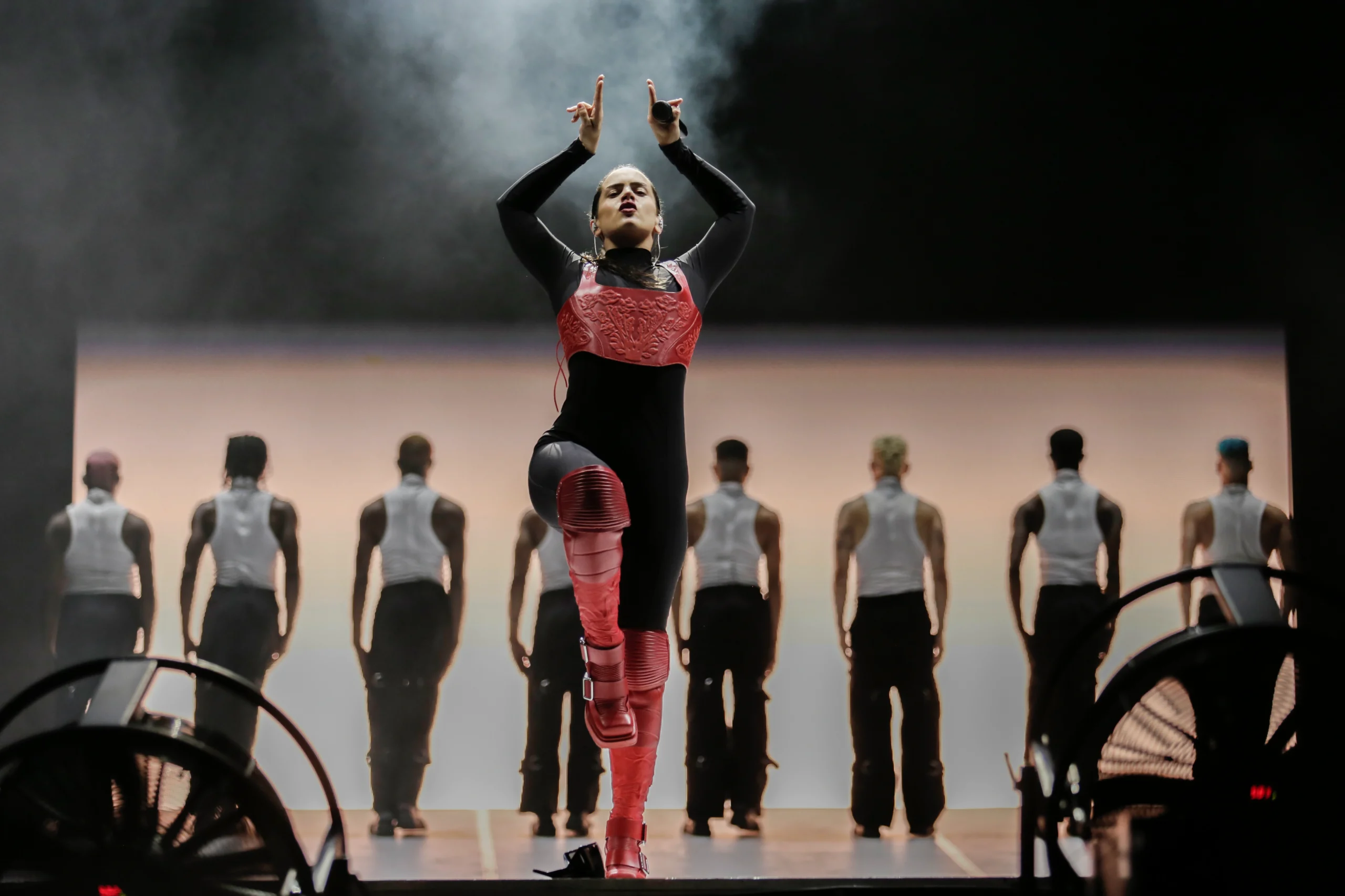
The accolades speak for themselves: 11 Latin Grammys, two regular Grammys, four MTV Music Video Awards, three UK Music Video Awards. She’s acted too—Pedro Almodóvar’s Dolor y Gloria in 2019, and she’s got a role coming in Euphoria’s third season. Most successful Spanish singer of all time? That’s the conversation people are having.
In Conversation: Fashion, Nudity, and Artistic Identity
Want to understand how Rosalía thinks? Watch her conversation with designer Bella Freud in the Fashion Neurosis series. They talk about flamenco, fashion, vulnerability, Naomi Campbell’s runway walk, and Chloë Sevigny’s style. It’s intimate and revealing.
Watch: Rosalía on Nudity, Flamenco, and Walking Like Naomi Campbell | Fashion Neurosis (Video below)
Her relationship with fashion isn’t shallow. It’s part of the whole project. Her album covers pull from religious art and historical imagery. Her videos are visual essays. Everything connects.
Lux: An Album in Four Movements
Lux is structured like a classical suite—four movements, each with its own arc. It spans 14 languages. Collaborators include Björk, Yves Tumor, Mexican regional star Yahritza y su Esencia, flamenco legends Estrella Morente and Sílvia Pérez Cruz, and Portuguese fado singer Carminho. It’s her most ambitious project to date.
The album wrestles with one central tension: earthly desires versus spiritual transcendence. It unfolds with operatic drama. This isn’t background music. Put your phone down and listen.
Movement I: The Material World
• Sexo, Violencia y Llantas: Right out the gate, she’s establishing the conflict—body versus spirit, desire versus devotion. The title translates to “Sex, Violence, and Tires,” which grounds everything in the physical realm.
• Reliquia: Soaring vocals, gorgeous strings. She’s exploring what happens when faith disappears, and you have to find yourself without it.
• Divinize: Here’s where feminine mysticism starts taking center stage.
• Porcelana: Dougie F guests on this one. The cello work is menacing. She’s examining power dynamics in desire, using porcelain as a metaphor—fragile but strong.
• Mio Cristo Piange Diamanti: Sung in Italian. Full operatic treatment. “My Christ Cries Diamonds”—suffering becoming beauty.
Movement II: The Transformation Begins
• Berghain: This is it. The lead single and the album’s peak. Björk and Yves Tumor collaborate on this intense orchestral-operatic journey. Named after Berlin’s legendary techno club—a place known for ritualistic, transcendent experiences—the song achieves what the whole album aims for. After 20 listens, this is the one that stands above everything else. Full stop.
• La Perla: A waltz with Yahritza y su Esencia. Mexican and Spanish traditions meet contemporary production.
• Mundo Nuevo: She takes a traditional song and makes it completely hers while respecting where it came from.
• De Madrugá: Written during the El Mal Querer era, but fits perfectly here. A reminder of her flamenco roots.
Movement III: Experimentation and Digital Mysticism
• Dios Es Un Stalker: “God Is A Stalker.” She’s asking uncomfortable questions about surveillance, divine omniscience, and digital identity. Peak experimentation.
• La Yugular: Inspired by Sufi poetry and Islamic mysticism. The jugular vein is a metaphor for complete devotion and surrender.
• Sauvignon Blanc: Piano ballad where she playfully undercuts mystical philosophy by mentioning her Jimmy Choos. Transformation doesn’t mean abandoning the material world completely.
• Focu 'Ranni: Physical edition exclusive. Collectors get rewarded.
• Jeanne: Another exclusive. Probably referencing Joan of Arc—feminine spirituality and strength.
Movement IV: Resolution and Transcendence
• Novia Robot: Final physical-only track. Humans merging with technology. Maybe divinity exists in our digital selves, too.
• La Rumba Del Perdón: Flamenco forgiveness featuring Estrella Morente and Sílvia Pérez Cruz. Full circle back to her roots, but transformed by the journey.
• Memória: com o fadista Carminho. Mortality, legacy, memory. What remains? How do we want to be remembered?
• Magnolias: The closer. Serene, spiritual, reunion with the divine. Fun fact: magnolias bloomed before bees existed—beetles pollinated them. Ancient, enduring. Perfect symbol for where this journey ends.
A Liberal Arts Approach to Pop Music
What makes Lux work is Rosalía’s refusal to compartmentalize. She treats culture as interconnected. Flamenco informs her vocals. Religious iconography shapes her visuals. Literary references structure her compositions. Electronic production creates textures that feel both ancient and futuristic.
After 20 listens, new layers keep revealing themselves. A melodic motif recurring across movements. Lyrical parallels between disparate tracks. Production choices echo earlier themes. She respects her audience’s intelligence.
The Verdict
Lux is career-defining. Motomami proved mainstream viability. This proves artistic fearlessness. The album asks you to slow down, engage deeply, and consider questions about desire, faith, identity, and transcendence that rarely appear in pop music.
“Berghain” alone justifies this album’s existence. But surrounded by everything else, it becomes part of something larger—a spiritual and artistic journey most contemporary artists wouldn’t attempt, much less execute with this level of grace and conviction.
If you appreciate music that challenges, transforms, and rewards deep engagement, Lux is essential. This is an artist at the peak of their creative powers, unafraid of difficult questions or ambitious answers.
★ ★ ★ ★ ★
Highly Recommended
---
About Cool Media LLC
Your online magazine for innovative articles on music, books & culture, tech reviews, law & current events, education, yoga & meditation.
Celebrating 13 years of independent music journalism | Established June 2012


"Pop's leading avant-gardist and one of its most convincing omnivores."
— Joe Coscarelli and Jon Caramanica, The New York Times

I am a pop music critic at The New York Times who hosts “Popcast,” The Times’s music podcast.
Explore More
Discover the artists and influences behind Rosalía's journey


