
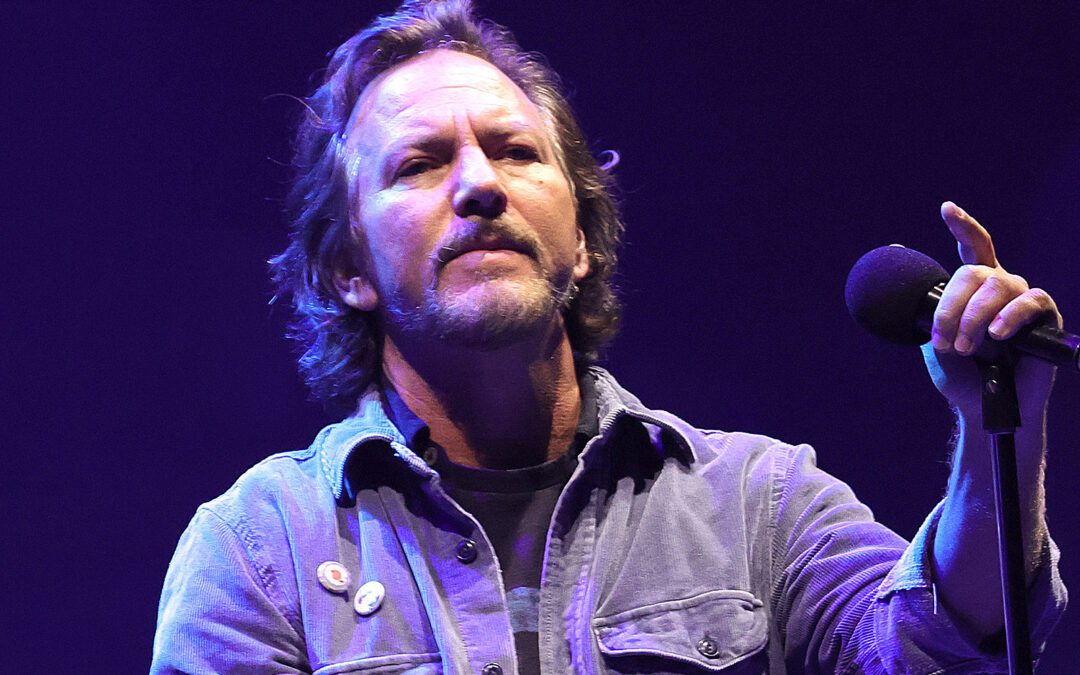

Eddie Vedder: Depth Below the Breakers
On any given night, Eddie Vedder might be the reason someone makes it through to morning. His baritone doesn’t just echo through arenas—it cuts through emotional fog like lighthouse light. Whether he’s roaring with Pearl Jam or whispering solo on a ukulele, Vedder doesn’t sell stardom; he testifies to survival. With the charisma of Morrison, the conscience of Springsteen, and a lyricism forged in loss and love, Eddie Vedder is a once-in-a-generation voice still singing in real time—for the living, the wounded, and the ones still holding on.
By Paul Langan
Editor, Cool Media, LLC
If a voice could break glass and rebuild your soul in the same breath, it might sound like Eddie Vedder. His is not a voice made in the studio. It comes from below, from the place where memory turns to salt and prayer turns to song. When he sings, it's less about hitting the note than pulling it from somewhere ancient, somewhere you've been before but forgot how to name.
You hear it in "Release."
You feel it in "Better Man."
You remember it in "Just Breathe."
It's not nostalgia. It's reckoning.
The Weight in the Room
Vedder walks into a room with the gravity of a man twice his size. Not performative. Just present. That kind of presence—the Morrison-like magnetism. But unlike Jim Morrison, Vedder turned away from the pedestal. He wasn't trying to become a god. He was trying to survive one. In his case, that meant surviving a father's absence, the rising fame that threatened to consume him, and the daily struggle of living with feelings in a culture that rewards the opposite.
He's no messiah, but he is a witness. And his music carries the weight of that witnessing—especially for the men who have spent decades learning how to cry again, or maybe for the first time, thanks to a song like "Black."
Songs for the Living
At his best, Vedder writes elegies in real-time. Not for the dead but for the dying within us—the parts of ourselves we lose in the name of adulthood, reputation, andresignation. Pearl Jam's catalog is more than post-grunge scaffolding. It's a document of how to stay human without becoming soft, how to rage without forgetting why.
Even his solo work—Into the Wild, Ukulele Songs—feels like a continuation of that lifelong meditation. "Society,” "Rise,” "Longing to Belong"—these aren't side projects. They're stripped-down confessions.
And they matter. Because in Vedder's hands, even the simplest song becomes a map.
Gleason, Fathers, and the Fragile Tether
The night this piece was first conceived—Friday, 2017—I had just watched "Gleason," the documentary chronicling former NFL player Steve Gleason's life with ALS. The scene that hit hardest wasn't a touchdown but an interview. Gleason, voice gone, body nearly stilled, connects with Vedder over shared stories of fatherlessness. It was more an invocation than an interview.
Vedder didn't flinch. He didn't play the star. He listened.
And in that silence, something sacred passed between them.
That's the thing about Eddie Vedder. He shows up. For ALS awareness. For mental health. For the friends lost too soon. He doesn't just sing about these things—he carries them like relics.
Influence Woven Quietly
Vedder has said in interviews that he doesn't want to be the story. However, the story keeps unfolding around him. Artists from Ben Harper to Glen Hansard, from Fiona Apple to J. Cole, all orbit some version of Vedder's authenticity. You hear it in how they treat silence and how they respect the weight of a lyric.
And, of course, there's Neil Young, who called Pearl Jam "the American Crazy Horse." Vedder and Young performed together more than once, each recognizing the other as a kindred spirit: ragged, resilient, unslick, unbroken.
A Singer Who Can Carry Grief
There's a reason "Better Man" still chokes up stadiums. It's not just the hook. It's the subtext. The unspoken. The ache. Vedder has a gift for channeling what men often bury—grief, guilt, longing, tenderness—and putting it into language that doesn't patronize or placate.
There's also a reason fans bring ashes to Pearl Jam concerts. The songs mean something. Vedder sings the truth of the thing, even when the thing is unbearable.
He doesn't sell absolution.
He sings about survival.
Eddie Vedder didn't come to save us.
But he taught us how to stay.
How to stand in the storm and not be swept away.
How to sing from the scar and not the wound.
How to breathe—and breathe again.
Pearl Jam - Better Man (Live from Madison Square Garden)
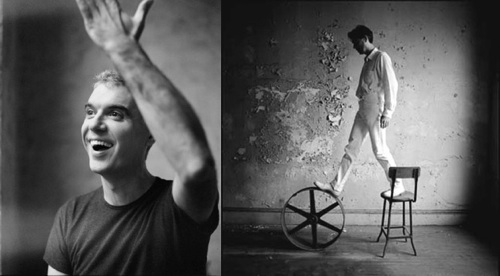
When artistic authenticity transcends genres and generations, magic happens. Like Vedder's raw emotional power, David Byrne's distinctive artistry continues to move audiences in unexpected ways—including a recent scene-stealing moment in FX's The Bear that left viewers mesmerized.
Pete Townshend & Eddie Vedder - Heart To Hang Onto - The Late Show with David Letterman - 07/28/1999
Pete Townshend & Eddie Vedder perform "Heart To Hang Onto" on The Late Show with David Letterman on 07/28/1999
Olivia Vedder, Eddie Vedder, Glen Hansard - My Father's Daughter (Official Video)
Read More: Eddie Vedder Tells Fans His COVID Was ‘Pretty Serious’ | https://ultimateclassicrock.com/eddie-vedder-covid/?utm_source=tsmclip&utm_medium=referral
In Memoriam
The Weight They Both Carried
Some friendships are built on shared triumph. This one was tempered by something heavier.
On August 19, 2010, at the Mountain Winery in Saratoga, a man took his own life during a Swell Season performance, falling to the stage a few feet from Glen Hansard. Hansard set down his guitar and went to him. A doctor in the crowd worked for nearly an hour. He could not be saved.
A decade earlier, on June 30, 2000, Eddie Vedder looked out from the Orange Stage at Roskilde and felt the night turn. Nine young men — the oldest twenty-six, the youngest seventeen — were crushed in the surge before him. Pearl Jam has carried it every day since.
Two performers. Two stages meant for communion. Two nights when the music stopped and the unthinkable stepped into the space where a song had been.
When Eddie, his daughter Olivia, and Glen came together for “My Father’s Daughter,” it was more than a collaboration. It was two men who understood — without needing to say it — what it costs to keep singing after the silence.
Remembering Glen Hansard, 1970–2026 →
If you or someone you love is struggling, the 988 Suicide & Crisis Lifeline offers free, confidential support 24/7. Call or text 988.
Respect deepens after listening to this short.