Two Words
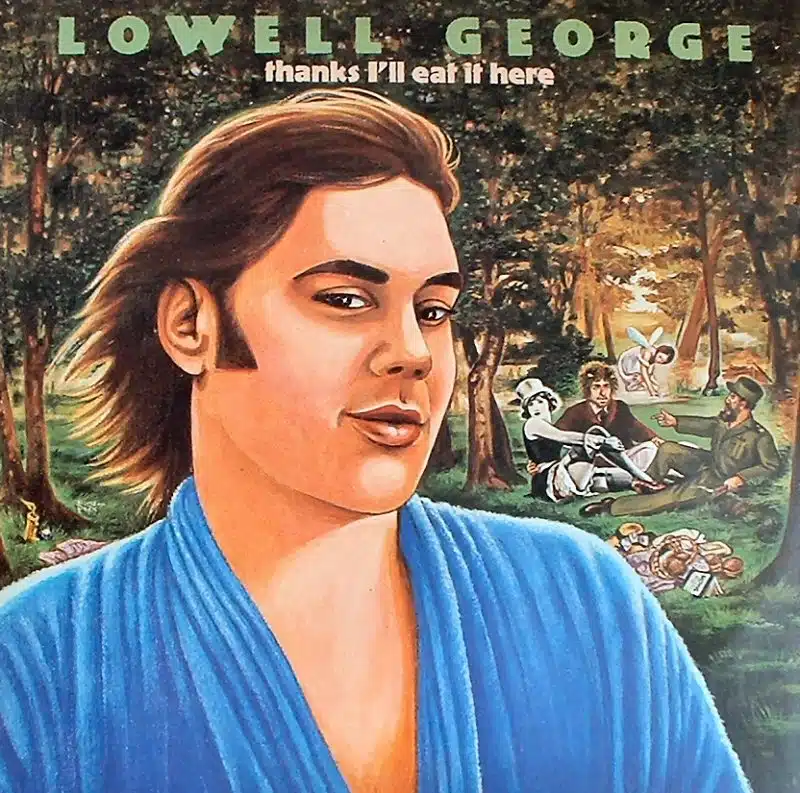
Little Feat is one of the great open secrets of American music. They never achieved large sales, and at present they are not a well-known name, even though the band is of a very high standard. Among professional musicians, however, the band has never needed an introduction. If you ask the slide players and bandleaders who began their careers in the 1970s which band they listened to simply for the pleasure of hearing a group play, the name that keeps coming up is Lowell George. He founded Little Feat and was its singer, main songwriter, and slide guitarist, and he is the two-word explanation for why the band is still rewarding on first hearing.
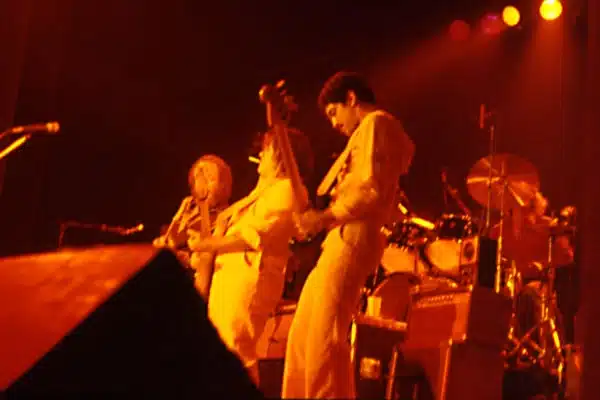
The best place to start is the video below. It was recorded on July 23, 1977, at the Grugahalle in Essen, Germany, as part of the first-ever broadcast of Rockpalast, the German concert program, with Little Feat headlining a bill that also featured Rory Gallagher and Roger McGuinn. The song played is "Dixie Chicken," the title track from their 1973 album and the one that most listeners hear first.
Leave it for a while and then place it next to the studio recording made four years before. "Dixie Chicken" runs 3:56 on the 1973 album. At Essen, however, the band lengthens it to over twelve minutes, shaping it into a rolling second-line jam supported by Bill Payne on piano and Sam Clayton on percussion. That is why it is worth watching: the studio version is the song as it was written, while the Essen version shows what the same six musicians could achieve with it when they had the space to move.
The Band That Walked In
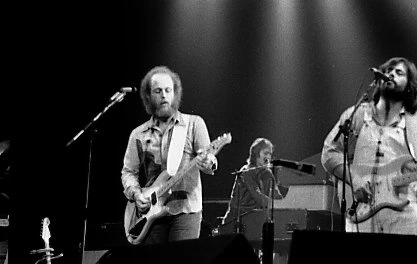
The six members of the band in Essen are the same six who made the 1973 album Dixie Chicken, which is why the recording belongs alongside it. George was responsible for singing, playing both slide and rhythm guitar, writing the majority of the material, and producing the record. Bill Payne played piano and organ and did a great deal of the work concerning the structure of the music; critics of this concert commonly note that he is the one who kept the performance together. Paul Barrère played second guitar and sang, and over time took on more of the songwriting, moving the band toward the jazzier directions they explored after Feats Don't Fail Me Now. Richie Hayward, one of the original members along with George, played the drums. Kenny Gradney had taken over from the original bassist Roy Estrada in 1972, and Sam Clayton provided the congas and percussion, the element that gives the band's rhythm a distinct character, different from standard rock time.
It was the 1972 additions that transformed the band. Both George and Payne had previously been members of Frank Zappa's Mothers of Invention, and it was Zappa who helped Little Feat secure their contract with Warner Bros.; the name is a reference to the Beatles' spelling. Before Gradney, Barrère, and Clayton joined the group, Little Feat were a solid California roots-rock band. After they joined, the band made Dixie Chicken.
The Canyon Native Who Left the Canyon Sound
George grew up in the section of Los Angeles known for producing the relaxed California singer-songwriter style, and throughout his career he moved away from that sound. His family lived in the Santa Monica Mountains above Grauman's Chinese Theater, on Mulholland Drive between Laurel Canyon and Woodrow Wilson Drive, and he was brought up in and around the Canyon before the term came to denote a particular scene. He knew the area's social circles firsthand and was a regular at Danny Hutton's house on Wonderland Avenue, where both Brian Wilson and Harry Nilsson were present. Dixie Chicken now appears on many of the essential Laurel Canyon album lists. Yet the album represents George taking the acoustic, folk-based sound that everyone else around him was making and heading toward New Orleans instead.
The background behind George's slide playing helps account for his restlessness, and one point will be obvious to anyone who has played a reed instrument. When he was a boy, George played a harmonica duet with his brother Hampton on Ted Mack's Original Amateur Hour; he played flute at school and worked as an oboist and baritone saxophonist on sessions for Frank Sinatra. It is an unusual career background for a rock guitarist: a formally trained multi-instrumentalist who could have played almost anything and built his own style on the basis of feel. The looseness people appreciate in Little Feat came about because the musicians, though they had the training to play tightly, decided that tight playing wasn't what the songs required.
The Hub Nobody Bought
Among musicians, the reputation was greater than the sales. If you look at George's session work during the 1970s, you find it on a surprising number of the decade's finer records. Little Feat were the backing band for Robert Palmer's 1974 debut, Sneakin' Sally Through the Alley; George played slide on five of the eight tracks, and the album opens with a cover of Feat's own song "Sailin' Shoes." He both played on and produced Bonnie Raitt's Takin' My Time in 1973, and in return Raitt sang on his first solo album. His slide guitar can be found on albums by James Taylor, John Cale, and Jackson Browne, and he produced the Grateful Dead's Shakedown Street. On Jackson Browne's The Pretender, George played the slide and sang harmony on "Your Bright Baby Blues," with Payne's organ beneath it. Browne referred to him as "the Orson Welles of rock," a comment that also shows how little attention he had received.
The Ghost Still Writing the Harmony
George died in 1979, at thirty-four. A benefit concert for his family took place at the Forum in Inglewood on August 4 of that year, and Jackson Browne, Linda Ronstadt, Emmylou Harris, and Bonnie Raitt performed. The following year, Jackson Browne, godfather to George's daughter Inara, wrote "Of Missing Persons" for her and included it on the album Hold Out.
The rest arrives nearly fifty years later. By early 2026, Little Feat were on tour as part of a lengthy farewell; their 2024 covers album, Sam's Place, had been nominated for a Grammy for Best Traditional Blues Album; and the band had released "Feathers and a Smile," a song George wrote around 1970, with Payne singing lead and a harmony vocal from George's daughter, Inara George, herself an established singer-songwriter and half of the bird and the bee. It is worth putting this alongside the Essen tape. In 1977, George performed "Dixie Chicken" for a crowd in Germany, and in 2026 his daughter sang a song he had left behind before she was old enough to remember him.