
Do We Need a Dr. Katz Marathon Right Now?
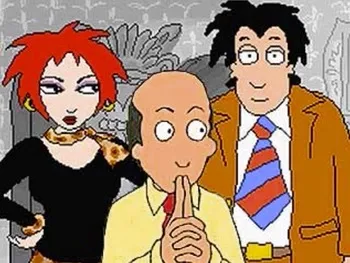
As we navigate an increasingly chaotic world, the calming humor of Dr. Katz, Professional Therapist feels more relevant than ever. First airing in 1995 on Comedy Central, this groundbreaking animated series tapped into a unique blend of therapy and comedy—an approach that resonates even more deeply in today’s mental health-conscious culture. With its iconic Squigglevision style and improvised, therapy-driven conversations, Dr. Katz not only entertained but also set a standard for how animated shows could be both low-budget and thought-provoking. Now, as we step into 2025, maybe it’s time to revisit this quirky, comforting series that still holds up two decades later.
A Groundbreaking Series with Modest Beginnings
Dr. Katz, Professional Therapist was unlike anything else on TV at the time. It was Comedy Central’s first original animated series, airing from May 28, 1995, to December 24, 1999, with a brief resurgence of shelved episodes in 2002. The series starred Jonathan Katz as the titular therapist, alongside H. Jon Benjamin as his aimless son Ben, and Laura Silverman as the sarcastic receptionist, Laura. Produced by Boston-based Tom Snyder Productions, later renamed Soup2Nuts, Dr. Katz pioneered a minimalist, cost-effective animation technique called Squigglevision.
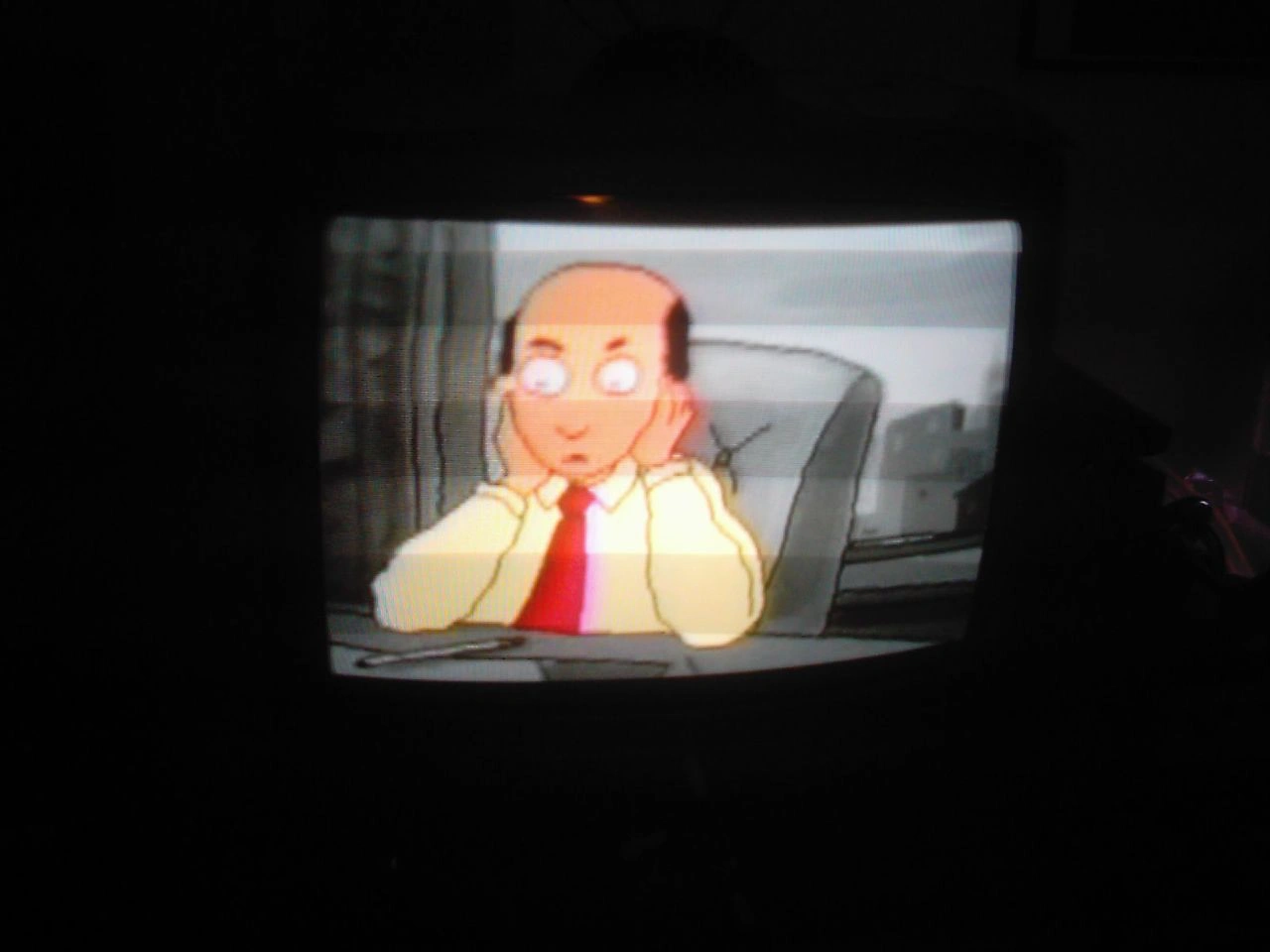
Squigglevision gave the show its distinctive look, with constantly squiggling outlines around the animated characters and objects, while static, grayscale backgrounds remained untouched. This unique aesthetic, though crude by today’s polished standards, became an essential part of the show’s charm. More importantly, it was born out of necessity. At the time, cable TV networks like Comedy Central didn’t have the budget for elaborate animation techniques. Tom Snyder, the creator of Squigglevision, developed this approach as an affordable solution to bring animation to cable TV.
Yet, the budgetary constraints didn’t hinder the creativity of Dr. Katz. In fact, they fueled it. The show’s innovation lay not only in its visual style but in its structure: it employed a method called “retro scripting.” While each episode had a basic outline, the dialogue was largely improvised by the cast. This gave the interactions a natural, unscripted flow, much like a real therapy session. It was also the perfect format for featuring stand-up comics—many of whom appeared as Dr. Katz’s patients. In the early episodes, these comedians would often perform adapted versions of their stand-up routines within the therapy context, creating a hybrid format that blended therapy, improvisation, and comedy.
The Influence of Dr. Katz on Modern Animation
In today’s media landscape, it’s hard to overstate the influence Dr. Katz has had on animated television. Its use of improvisation and quirky humor laid the groundwork for later animated series like Bob’s Burgers and Home Movies, both of which featured Dr. Katz alum H. Jon Benjamin and Bob’s Burgers creator Loren Bouchard. Bouchard has spoken about how working on Dr. Katz shaped his approach to character-driven, improvisational storytelling—an influence that’s still evident in his work today.
The show also demonstrated that animation could be used to explore everyday, human experiences rather than fantastical or slapstick scenarios. By centering its episodes around therapy sessions, Dr. Katz was able to explore real-world anxieties, personal quirks, and the humor in our shared struggles. In this way, it paved the way for more grounded, character-driven animated shows, including BoJack Horseman and Tuca & Bertie, which similarly tackle mental health themes with humor and heart.
Why Dr. Katz is Still Relevant Today
In 2025, Dr. Katz feels especially timely, not only because of its humor but because of its themes. Over the last decade, there has been a growing cultural awareness of mental health, and therapy has become a more widely accepted part of our everyday lives. In many ways, Dr. Katz was ahead of its time. The show made therapy sessions accessible and even entertaining, showing audiences that talking about your problems didn’t have to be a heavy or uncomfortable experience. Instead, it could be filled with laughter.
Moreover, in a world increasingly reliant on virtual connections and telehealth—especially in the wake of the COVID-19 pandemic—the low-fi therapy setting of Dr. Katz feels strangely modern. The simplicity of Dr. Katz’s office, where patients could unload their worries with minimal fuss, mirrors the rise of teletherapy sessions, where people can talk to their therapist from the comfort of their own homes. The show’s humor comes from the awkward, sometimes stilted conversations, which feel even more relatable now, given how much time we spend communicating through screens.
The Case for a Dr. Katz Marathon
With the endless stream of complex, high-octane content dominating streaming platforms, there’s something refreshingly simple about Dr. Katz. Its minimalist animation, gentle humor, and improvisational style make it the perfect antidote to the overstimulating nature of today’s media. A marathon of Dr. Katz might be just what we need—a reminder that sometimes, all you need for a good laugh is a squiggly line, a comfy therapy chair, and some awkward, heartfelt conversations.
As we look back at the cultural icons that shaped animation, Dr. Katz stands out for its innovation, wit, and relevance to the human condition. If you haven’t experienced the soothing, squiggly genius of Dr. Katz, now might be the perfect time to dive in. After all, what better way to unwind than with a little animated therapy?
In an age of endless content and complex narratives, Dr. Katz offers a refreshingly simple yet profound antidote. Its quirky animation and therapeutic conversations feel more soothing now than ever. Maybe what we need in 2025 isn’t more high-octane drama but a return to this comforting series that taught us laughter and therapy could go hand in hand.
Dr. Katz, Professional Therapist - Season 6 (1999-2002)
A divorced father, he has custody of his 23-year-old slacker son Ben, who dreams of wealth and freedom but is too lazy to find a real job. Dr. Katz's receptionist is the acerbic Laura. He spends his free time in the bar "Jacky's 33" with his friends Stan and Julie, the bartender.
0:00 S6e1 Ted Alexandro, Jeff Goldblum 21:58 S6e2 Ed Crasnick, Teri Garr 43:22 S6e3 Margaret Cho, Paul F.Tompkins 1:05:03 S6e4 Mitch Hedberg, Dom Irrera 1:26:56 S6e5 Tom Herzt, Al Lubel 1:48:48 S6e6 Jon Stewart, Wanda Sykes 2:10:33 S6e7 Ian Bagg, Greg Behrendt 2:32:32 S6e8 Carol Leifer, Kevin Meaney 2:54:33 S6e9 Dana Gould, Merrill Markoe 3:16:34 S6e10 Mitch Hedberg, Matt Siegal 3:38:34 S6e11 Dom Irrera, Al Lubel 4:00:33 S6e12 Sam Brown, Paul F.Tompkins 4:22:32 S6e13 Rich Gustus, Wanda Sykes 4:44:33 S6e14 Julie Barr, Dom Irrera 5:06:30 S6e15 Bob Balaban, Jake Johanssen 5:28:32 S6e16 Dave Attell, Catherine O’Hara, Steve Sweeney 5:50:33 S6e17 Kevin Brennan, Louis C.K 6:12:39 S6e18 Whoopi Goldberg, Conan O’Brien.
Dr. Katz, Professional Therapist is an adult animated series that originally ran on Comedy Central from May 28, 1995, to December 24, 1999, starring Jonathan Katz, H. Jon Benjamin, and Laura Silverman. Produced by Tom Snyder Productions (which would later become Soup2Nuts), it was the first-ever original animated cartoon series shown on Comedy Central, paving the way for South Park and the like.
The show was computer animated in a crude, easily recognizable style called Squiggle Vision, in which all persons and animate objects are colored and have constantly squiggling outlines. In contrast, all other inanimate objects are static and usually gray. The show also utilized "retro scripting," Each episode has a basic system, but the actors improvise the dialogue.
Dr. Katz's Therapy Sessions (Jonathan Katz et al.)
The great Jonathan Katz (with administrative assistance from Laura Silverman) analyzes a group of mad, bad and dangerous-to-know comedians. The patients are Joy Behar, Sandra Bernhard, Bill Broadus, Louis C.K., Anthony Clark, Janeane Garofalo, Andy Kindler, Carol Leifer, Ray Romano, Rita Rudner, Garry Shandling, and Steven Wright. Any similarity to the long-running series 'Dr. Katz, Professional Therapist' is purely incidental. To buy a box set of that wonderful show, click the link below:
Dr. Katz S03 E13 Reunion & Katz Expert Therapist A Journey For The Betterment
Dr Katz Expert Therapist Period 4 Episode 33 Of 81 Ben Treats Cartoons & 34 Memoirs

Meditation: Awareness of Being Is Happiness Itself
Find yourself first as the witnessing presence of awareness in the background of experience. Recognize yourself as that and be that knowingly. 'I' is the name we give to the knowing, aware, perceptual element of the experience. Simply know to be; be aware of being. Awareness of being is happiness itself. Awareness has no form but assumes all forms of experience. Why do I believe that I am a temporary, finite separate self and suffer? This infinite awareness must seem to become a finite mind. The infinite cannot know the finite directly, so must do so through the agency of the mind. The faculties of perception and thought are the means by which the one appears as many. You, finite mind, are the localized activity through which infinite awareness is able to actualize a segment of its infinite potential in form. As such, the finite mind is the instrument of creativity, of love. This meditation has been taken from Rupert's five-day retreat at home in February 2021.
https://www.coolmediallc.com/durham-cool-respect-for-the-actor-matthew-rhyes/


