
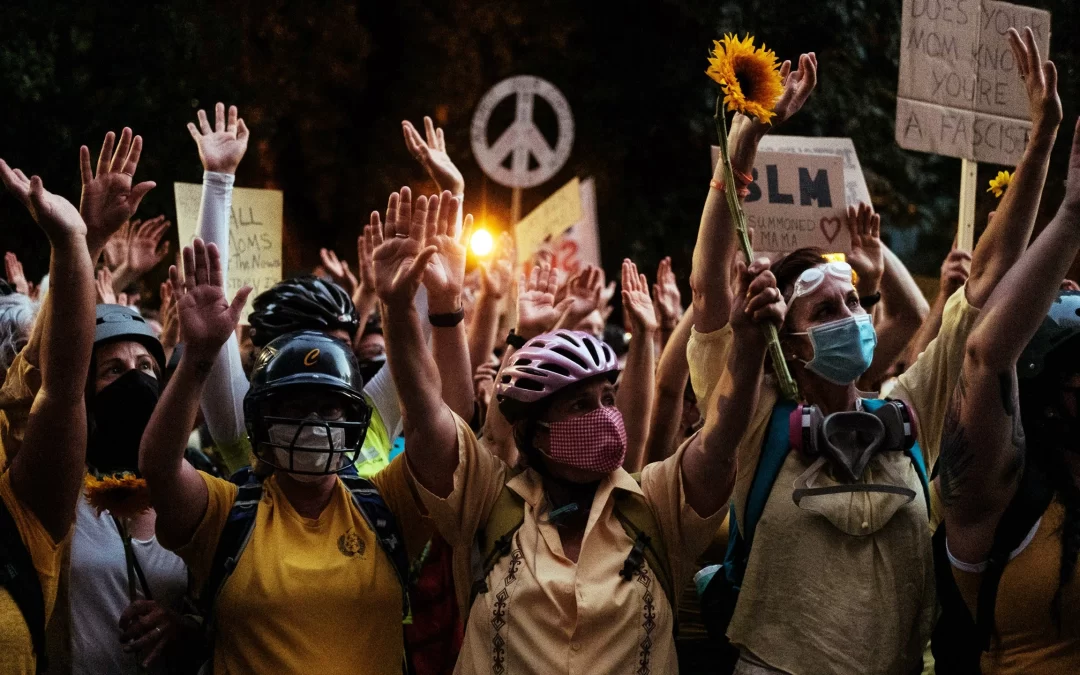
Constitutional Rights Under Siege: From Portland 2020 to Los Angeles 2025
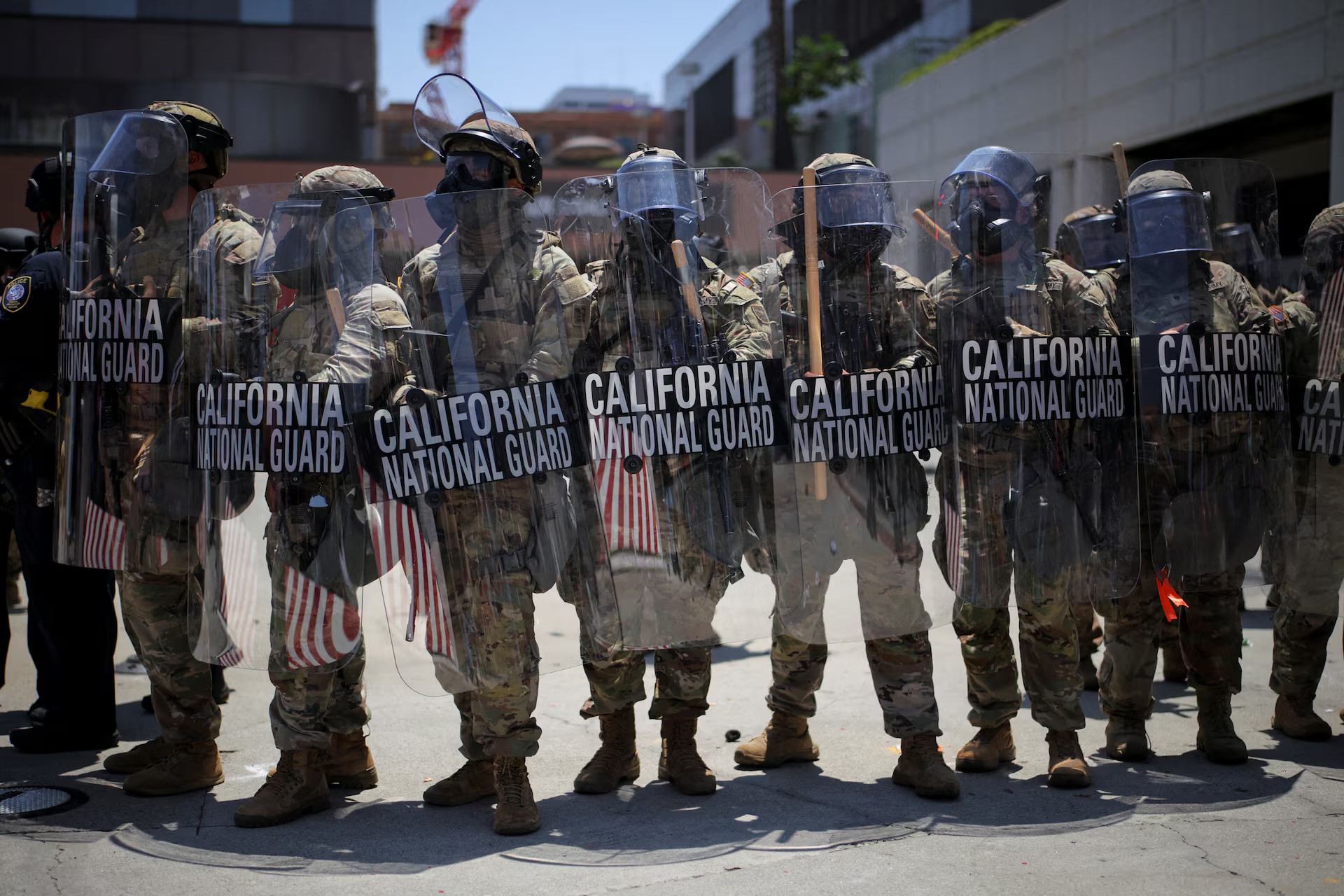
The constitutional violations we witnessed in Portland during 2020 have not only persisted but escalated dramatically in 2025, as President Trump deployed 4,000 National Guard troops and 700 active-duty Marines to Los Angeles streets in response to immigration enforcement protests. What began as peaceful demonstrations against ICE raids on June 6 has now become a constitutional crisis, with federal military forces patrolling civilian streets without state consent—something not seen since Alabama's civil rights era in 1965. California Governor Gavin Newsom has filed federal lawsuits challenging this unprecedented "power grab." At the same time, Los Angeles Mayor Karen Bass cautions other city mayors that Los Angeles is a beta "test case" for federal control over local authorities.
The Marines have already made their first civilian detention using zip ties. At the same time, Major General Scott Sherman claims troops "will not participate in law enforcement activities"—a distinction that grows thinner by the day. As we witness split-screen images of U.S. troops on American streets in both Los Angeles and Washington, D.C., the "new normal" of constitutional violations that emerged during the first Trump administration has returned with unprecedented federal military force. The constitutional education we advocated for in 2021—urging Americans to "read your constitution, know your rights"—has never been more critical as we watch federal power override state authority in real-time.
What we documented in Portland was merely a preview of the constitutional crisis now unfolding in Los Angeles, where the fundamental balance between federal authority and civilian governance hangs in the balance.
National Guard arrives in L.A. after protests erupt over ICE raids.
Taking Rights Seriously | Judge Andrew P. Napolitano
Recorded at the Mises Institute in Auburn, Alabama, on 13 July 2020.
Get excited, like me, by studying law? Have you taken any courses, classes on American Law, Natural law, constitutional law? Have you read our U.S. Constitution (one of the thinnest National Constitutions in the world)?
Read your constitution, know your rights as the real-life constitutional right protection examples are piling up quickly. Prepare thyself.
4,543 words
The Constitution contains 4,543 words, including the signatures, and has four sheets, 28-3/4 inches by 23-5/8 inches each. It contains 7,591 words, including the 27 amendments. The Constitution was ratified by specially elected conventions beginning in December 1787.
You may like the video below for its sweeping coverage, in quick speak, of the history of The Constitution, the Articles, and Federalism.
If this sounds like a walk through Purgatory for you, then skip watching and move along to a truly great example of Constitutional Amendment I (Portland Protests and the Federal response)
Congress shall make no law respecting an establishment of religion, or prohibiting the free exercise thereof; or abridging the freedom of speech, or of the press, or the right of the people peaceably to assemble and to petition the government for a redress of grievances.
The Constitution, the Articles, and Federalism: Crash Course US History #8
In which John Green teaches you about the United States Constitution. During and after the American Revolutionary War, the new country's government operated under the Articles of Confederation. While these Articles got the young nation through its war with England, they weren't of much use when it came to running a country. So, the founding fathers decided to try their hand at nation-building, and they created the Constitution of the United States, which you may remember as the one that says We The People at the top. John will tell you how the convention came together, some of the compromises that had to be made to pass this thing, and why it's very lucky that the framers installed a somewhat reasonable process for making changes to the thing. You'll learn about Shays' Rebellion, the Federalist Papers, the elite vs. rabble dynamic of the houses of congress, and start to find out just what an anti-federalist is.
Hey teachers and students - Check out CommonLit's free collection of reading passages and curriculum resources to learn more about the events of this episode. Founding Fathers debated over how to govern the new nation, beginning with the Articles of Confederation: https://www.commonlit.org/texts/artic...
When the Founding Fathers finally wrote the Constitution, they realized they needed to add The Bill of Rights to get citizens on board with the new government.
I have included this Introduction to Constitutional Law for pre-law students or anyone interested in a deeper dive.
Introduction to Constitutional Law: How to Approach Constitutional Law Fact Patterns [LEAP Preview]
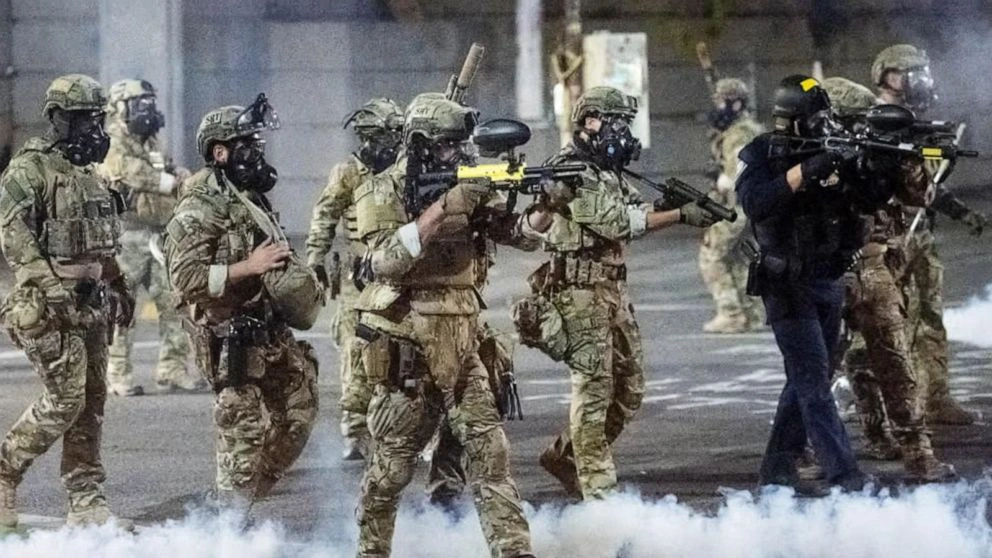
Watch this video closely, first for the peaceful wall of non-violent mothers, next to the US Navy Vet's nonviolent attempt to talk with the Federal Agents. Watch the Federal Agent (see U.S. Marshall) response to both forms of non-violent protest. Does this look like sound law enforcement practice to you? Do these Federal Agents have training in law enforcement? Are the Federal Agents maintaining peace or fomenting chaos (see intentional). Does this worry you? If so what is the best way to protest? Do we peacefully gather with like minded souls to march together with signs that document our concerns?
I would argue that each and every soul who plans to protest do so peacefully, and only after reading our constitution, have knowledge of your constitutional rights and be prepared for agitators to both your constitutional freedoms and your peaceful message. Remember that a right comes with a responsibility.
Ask yourself who has the most to gain from our apparent Right/Left political divide? Consider how much Americans have in common when we think like Americans with the full interest of preserving our precious constitutional Republic.
Consider economic disparity rather than Right or left. Think of the great common interest of the broad coalition of non -1% Americans (see Vox-populi). Andrew Yang has some great insight on this important topic. Think of the numerous examples of "1 percenters" and or mass affluent individuals who have an innate or survival interest in greater economic fairness and less strident socio-economic divide.
Veteran Speaks Out After Attack By Federal Agents In Portland
U.S. Navy veteran Chris David was so disturbed by the images of federal agents attacking unarmed protesters that he decided to visit the protests himself. But he soon became a victim of one of those brutal attacks. Aired on 7/20/2020.
Federal clashes with Portland protesters raises legal questions about the use of force
A Navy vet says he was attacked by U.S. marshals when he tried to speak to them. Lawmakers and civil rights lawyers have expressed concern about the agents’ violent clashes with protesters
Judge Napolitano says the government is violating your privacy rights over this
Fox News Contributor Judge Andrew Napolitano weighs in after a report from the Wall Street Journal says governments are following data from tracking apps.
Jordan Klepper Solves Guns - Full Episode
From the nation's capital to the woods of Georgia and beyond, Jordan Klepper talks with lawmakers, militia members and more to solve America's gun crisis once and for all.


