John Coltrane, AH um
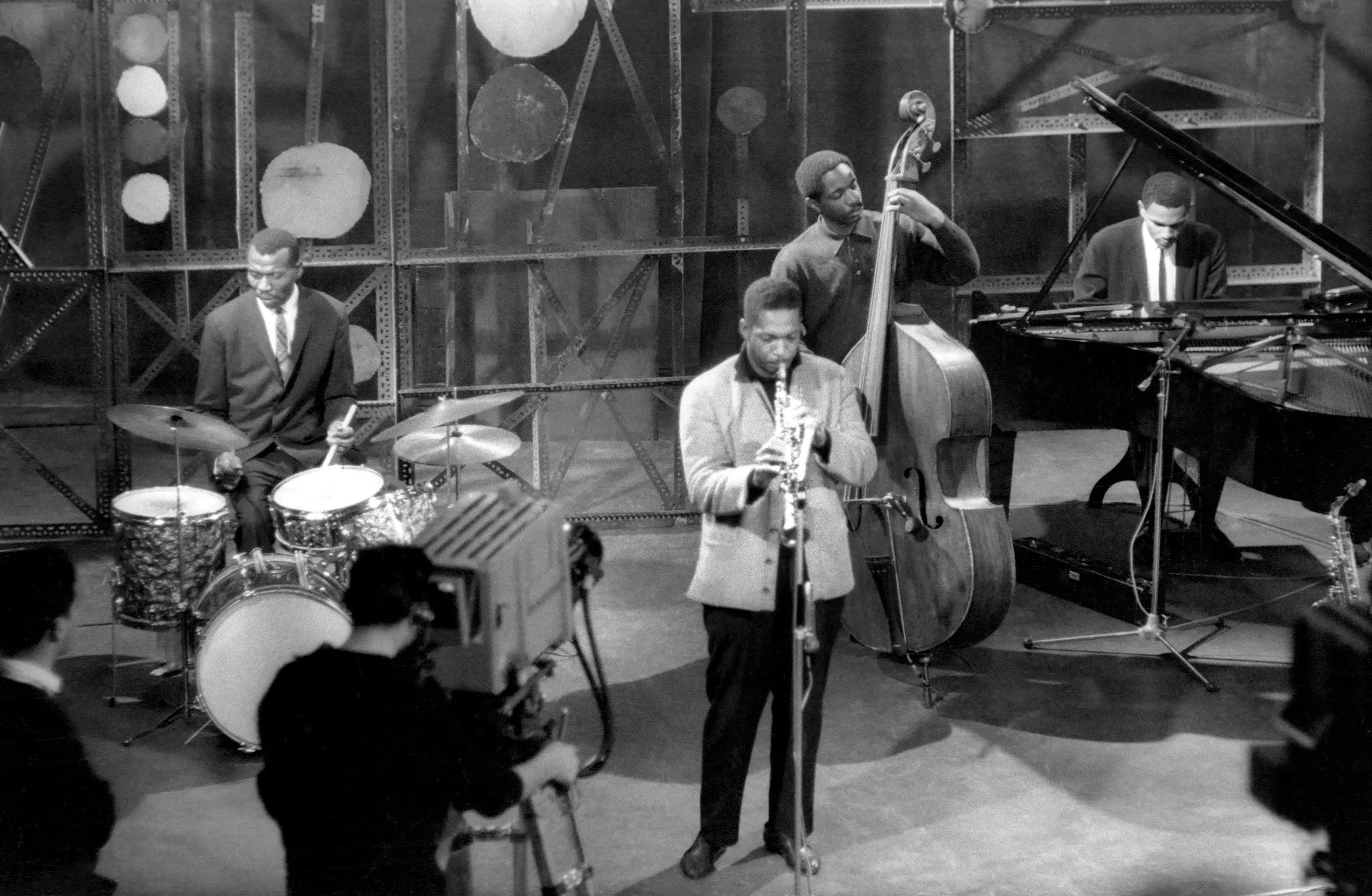
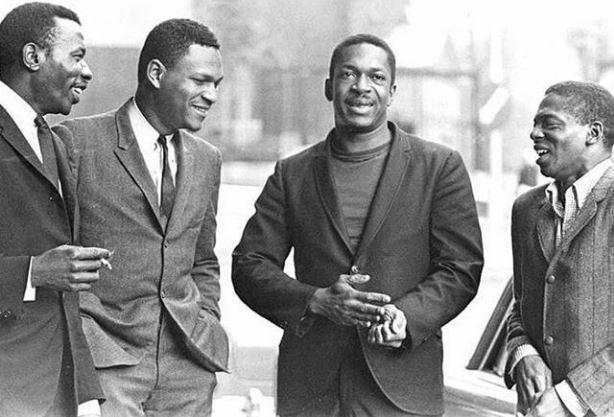
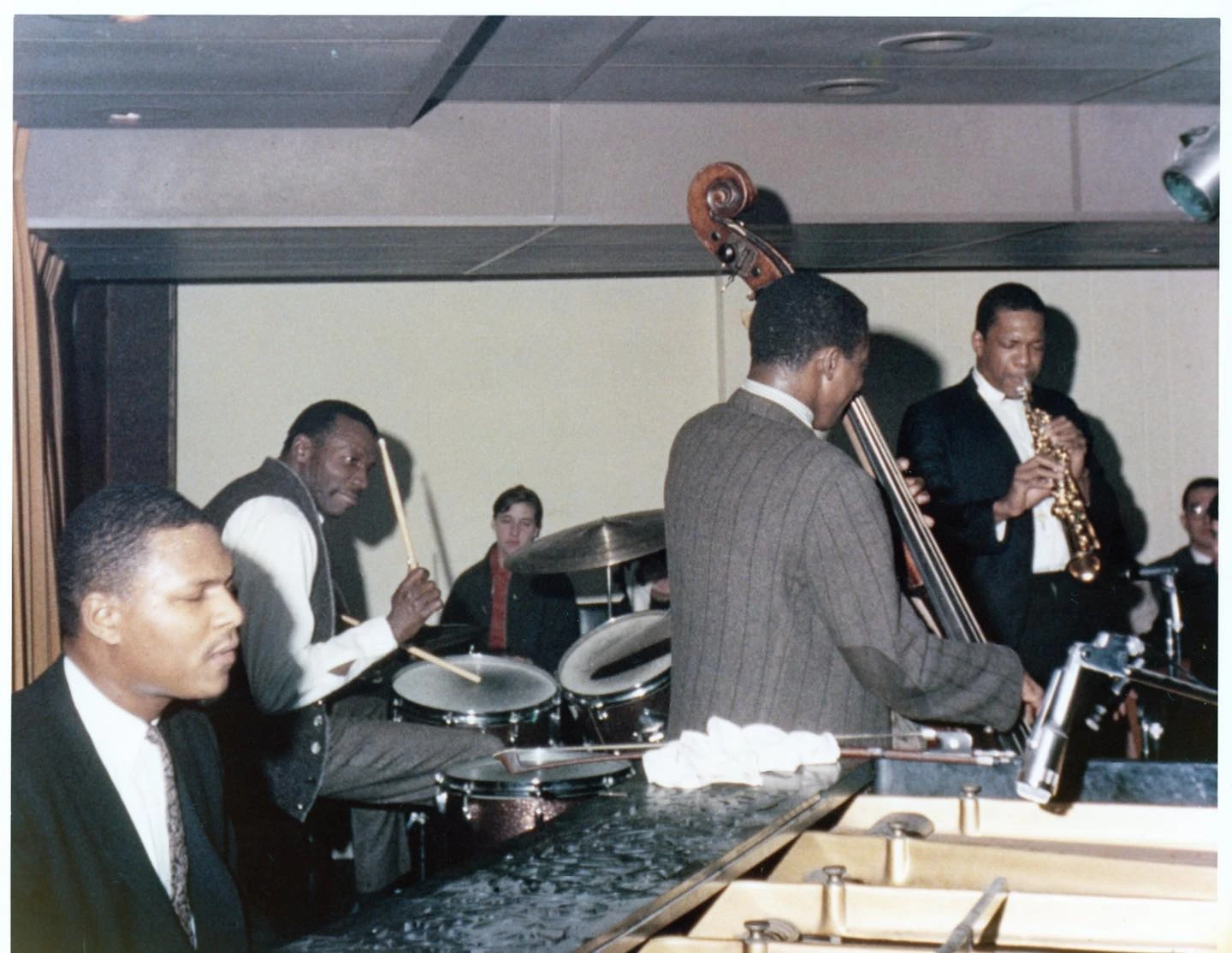
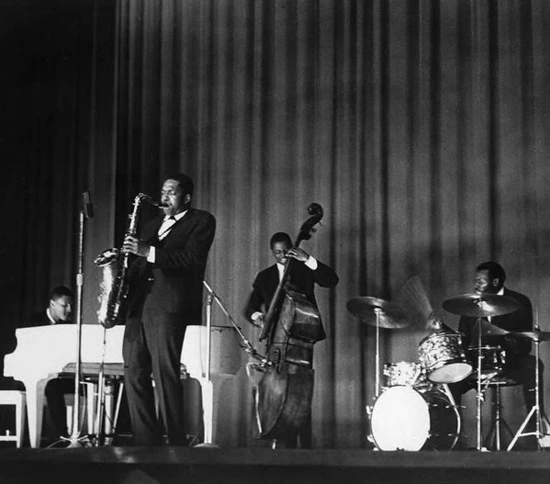
John Coltrane, Elvin Jones, McCoy Tyner, and Jimmy Garrison formed one of the most revered ensembles in jazz history—the John Coltrane Quartet. Their collective work is a testament to the power of musical synergy, and their recordings from the early 1960s remain landmarks of creativity, emotional depth, and technical brilliance.
John Coltrane - The Visionary
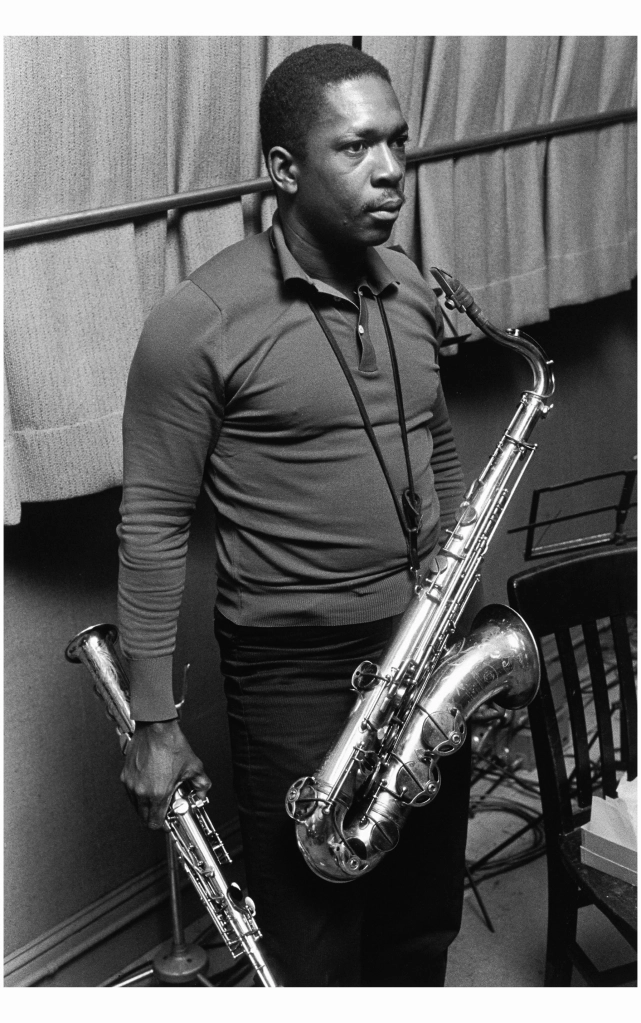
Coltrane, the leader and tenor saxophonist, was a groundbreaking innovator who constantly pushed the boundaries of jazz. His explorations of modal jazz, spirituality, and avant-garde improvisation culminated in albums like A Love Supreme and Crescent. Coltrane’s sound was both searching and serene, capable of expressing raw intensity and profound beauty.
Elvin Jones - The Rhythmic Force
On drums, Elvin Jones brought an unmatched dynamism to the quartet. His polyrhythmic approach created a swirling, almost hypnotic energy that propelled the group’s improvisations into uncharted territory. Jones’ drumming wasn’t just accompaniment but an integral voice in the ensemble, speaking with power and subtlety alike.
McCoy Tyner - The Harmonic Architect
McCoy Tyner’s piano was the harmonic and melodic foundation of the quartet. His left-hand chords provided a rich, modal grounding, while his right-hand improvisations soared with clarity and precision. Tyner’s playing was deeply lyrical yet structurally innovative, perfecting Coltrane’s expansive vision.
Jimmy Garrison - The Grounded Anchor
Jimmy Garrison on bass was the stabilizing force, grounding the group with his steady, resonant lines. His improvisations often carried a meditative quality, and his sense of time and space allowed the quartet to explore freely without losing cohesion. Garrison’s contributions ensured the music remained deeply rooted, no matter how far the quartet ventured.
Collective Genius
Together, this quartet defined a golden era in jazz. Their interplay on tracks like “Acknowledgement” from A Love Supreme, the brooding beauty of Crescent, or the fiery improvisations of live performances like those at the Village Vanguard revealed a collective intuition that felt almost otherworldly. The quartet wasn’t just playing music—they were channeling something transcendent.
This ensemble is more than a cornerstone of jazz—they’re a beacon for all music, exemplifying the heights that collaboration, trust, and artistic daring can achieve.
The release of Both Directions at Once: The Lost Album in 2018 was indeed a seismic event in the world of jazz and beyond. Any discovery of previously unheard music by an artist of John Coltrane’s stature is significant, but this particular session, recorded on March 6, 1963, at Rudy Van Gelder’s legendary studio, carries a profound weight. This is because it captures Coltrane and his Classic Quartet during their creative zenith—a moment where the balance between structured jazz traditions and bold innovation was perfectly struck.
The Classic Quartet at Its Peak
At the time of the recording, Coltrane’s quartet—McCoy Tyner, Jimmy Garrison, and Elvin Jones—was in the midst of a creative surge. The group was redefining the sound of jazz with a blend of fiery intensity, spiritual depth, and technical virtuosity. Both Directions at Once bridges the gap between Coltrane’s modal explorations (as seen in My Favorite Things and Crescent) and the spiritual transcendence that would define A Love Supreme the following year.
The Music: Bold and Unveiled
The session presents 90 minutes of material that includes original compositions, standards, and alternate takes, offering a window into the quartet’s creative process. Highlights include:
• “Untitled Original 11383”: A hauntingly lyrical piece showcasing Coltrane’s deep melodic sense.
• “One Up, One Down”: A ferocious display of interplay between Coltrane and Elvin Jones, brimming with rhythmic intensity.
• “Impressions”: A powerful reminder of Coltrane’s modal brilliance, with Tyner and Garrison anchoring his flights of improvisation.
Why It Matters
The album’s title, Both Directions at Once, is fitting. It reflects Coltrane’s ability to simultaneously honor the jazz tradition while pushing its boundaries. This session is a snapshot of a musician and a band in transition, moving toward the cosmic explorations of his later work but still deeply rooted in the earthy swing of jazz.
A Rediscovery for the Ages
Hearing Both Directions at Once for the first time feels like unearthing a lost masterpiece. The pristine sound quality allows us to experience the immediacy of Coltrane’s tone, Tyner’s harmonic genius, Garrison’s resonant bass lines, and Jones’ explosive drumming. For longtime fans, it’s a treasure trove; for newcomers, it’s an ideal introduction to one of jazz’s most transformative bands.
The buzz surrounding this release was more than justified—it was a rediscovery that added new dimensions to Coltrane’s legacy, reinforcing his timeless relevance and the boundless potential of jazz.

John Coltrane Quartet -Impressions
Impressions
McCoy Tyner:Piano
Jimmy Garrison:Bass
Elvin Jones:Drums
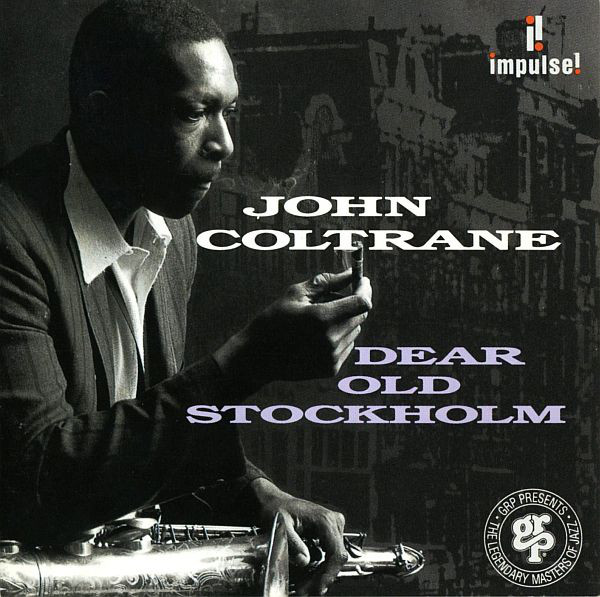
John Coltrane
Any newly discovered music from a legend on the order of John Coltrane is an event. But the reason advance buzz has been particularly feverish for Both Directions at Once: The Lost Album, a previously unissued session from March of 1963, is that it comes from the era of his so-called Classic Quartet. Simply put, the group – featuring pianist McCoy Tyner, bassist Jimmy Garrison and drummer Elvin Jones – was Coltrane’s greatest band, a unit perfectly poised between hard-edged swing and gravity-defying exploration. And here, suddenly, we have 90 minutes of excellent-sounding material from them that most never knew existed.
@oceanpablohealer Coltrane Reverie #johncoltrane #lovesupreme #tenorsaxplayer #lovesupreme afroblue #nagasaki flute
♬ original sound - durlang58 - durlang58
John Coltrane Quartet - Live in Belgium 1965
Music
Naima · John Coltrane
Drums: Jimmy Cobb
Tenor Saxophone: John Coltrane
Producer: Nesuhi Ertegun
Bass Guitar: Paul Chambers
Engineer: Phil Iehle
Engineer: Tom Dowd
Piano: Wynton Kelly
Composer: John Coltrane
℗ 1960 Atlantic Recording Corporation for the United States and WEA International Inc. for the world outside of the United States.
Provided to YouTube by Rhino Atlantic
John Coltrane Quartet - Impressions.
Music